



AI Summary: Preparing a turned component for grinding means reviewing its production route, the stock left after turning, its condition after machining or heat treatment, its locating surfaces, and its inspection records. What a part needs before it reaches a centerless grinding machine or a cylindrical grinding machine depends on the component drawing and the grinding process selected for it.
Introduction to Grinding Machine Preparation
A turned shaft may need further checks before it is ready for grinding. The material left after turning, the condition of the component and the chosen setup all influence the next stage of the process.
In precision shaft manufacturing, pre grinding preparation starts with the component drawing and production route. Engineers can then review the grinding stock allowance and decide what must be checked before the part reaches a centerless grinding machine or a cylindrical grinding machine from a supplier such as Bhavya Machine Tools.
Manufacturing Route From Turning to Cylindrical or Centerless Grinding Machine
Before grinding begins, it helps to look back at the component drawing and the finished dimensions it calls for. The route from raw material to finished part usually passes through turning, and sometimes other machining stages, before grinding.
Some routes include heat treatment between turning and grinding, while others do not. The position of grinding in this sequence affects how much stock should remain and what condition the part should be in when it arrives.
A component may be routed to a centerless grinding machine, a cylindrical grinding machine, or neither, depending on its geometry and tolerance requirements. Not every turned part needs both operations, and the choice should follow the drawing and process plan rather than assumption.
 Email Us Today!
Grinding Stock Allowance as Pre Grinding Preparation
Grinding stock allowance is the material left on a surface for removal during grinding. For a shaft diameter, it is the difference between the dimension before grinding and the specified finished diameter.
A workshop should state whether an allowance is expressed on the diameter or per side. It should also check the remaining material after any intermediate operation, including heat treatment, before releasing the part for grinding.
A single diameter reading does not confirm adequate stock around the entire surface. Runout, taper or distortion can leave less material in some areas, so the part should be checked against the process plan before grinding.
Incoming Condition Checks for Cylindrical and Centerless Grinding Machine Jobs
Heat Treatment and Pre Grinding Preparation
Not every component passes through heat treatment on its way to grinding. Where a process plan includes it, the part should be reviewed again once heat treatment is complete.
Heat treatment can change a component’s dimensions or surface condition compared with how it left the turning operation. This makes it worth confirming the part still matches what the grinding stage expects.
If the earlier stock allowance no longer looks appropriate after heat treatment, this is worth raising between the heat treatment, turning and grinding teams before the part is released to grinding.
Locating Surfaces for a Cylindrical Grinding Machine or Centerless Grinding Machine
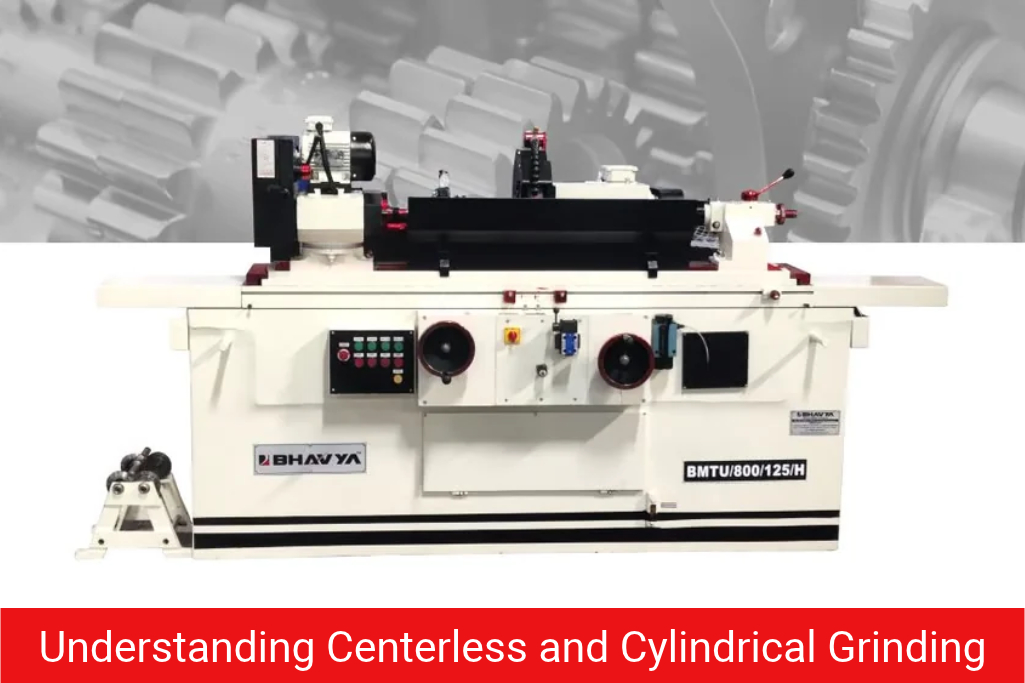
For cylindrical grinding between centres, such as on a Bhavya Machine Tools BMTU Series machine, the component’s centre holes and the machine centres used to support it are worth inspecting. Their condition matters because they establish how the part is positioned for the operation. Not every cylindrical job is set up this way, so this check applies where the selected process calls for it.
In centerless grinding, such as on the company’s SL Series, the workpiece is supported by a work rest blade and controlled by a regulating wheel while the grinding wheel removes material. The surfaces used for support and contact should be reviewed for the selected setup.
Whichever method applies, the intended locating or support arrangement should be confirmed against both the component and the machine setup planned for the job. These are general process explanations, and the actual requirements should follow the workshop’s own process plan.
Final Readiness Review for Precision Shaft Manufacturing
Before releasing the component to grinding, record its identification against the drawing or job order, inspection results, remaining stock and condition after any specified heat treatment. Include unresolved issues and any instructions the grinding operator needs.
Our Other Product
Shaping MachinesDiscuss Cylindrical Grinding Machine and Centerless Grinding Machine Needs with Bhavya Machine Tools
When approaching a grinding machine supplier, buyers can make the conversation more useful by sharing some details in advance. Component dimensions and geometry are a starting point.
Material and condition before grinding, along with required finished dimensions and tolerances, help narrow down suitable options. Planned production quantity and the intended grinding process also matter.
Workshop space available for the machine is another factor worth mentioning early. Bhavya Machine Tools can be contacted to confirm machine suitability, specifications, and the configurations available for a given job.
About Bhavya Machine Tools
Bhavya Machine Tools is based in Ahmedabad, India, and offers workshop and metal fabrication machinery. Its grinding machine range includes surface, cylindrical and centerless grinders.
The company’s SL Series centerless grinding machines include models with different listed grinding diameter ranges, and its BMTU Series cylindrical grinding machines are built for grinding between centres. Buyers can discuss their component dimensions, production requirements and intended process with Bhavya Machine Tools when reviewing a suitable machine.
Conclusion: Preparing a Component for Centerless or Cylindrical Grinding
Reviewing the production route, the stock left after turning, the component’s condition, and its locating requirements can help a workshop prepare a part properly before it reaches grinding. These checks depend on the component drawing and the grinding process selected for each job. For questions on matching a component to the right cylindrical or centerless grinding machine, Bhavya Machine Tools can be reached to discuss specific requirements.
Frequently Asked Questions on Cylindrical and Centerless Grinding Machine Preparation
Frequently Asked Questions on Cylindrical and Centerless Grinding Machine Preparation
What is grinding stock allowance?
Grinding stock allowance is the material left on a surface for removal during grinding. For a shaft, it is the difference between the dimension before grinding and the specified finished diameter.
How should stock allowance be stated on a shaft drawing or process sheet?
A drawing or process sheet should state whether the allowance is expressed on the diameter or per side, so the grinding stage starts from the same understanding as turning and any intermediate process.
What should happen if a shaft has insufficient stock before grinding?
If a shaft arrives with less material than the process plan expects, it should be reviewed and the route corrected before it is loaded onto a centerless or cylindrical grinding machine.
Why do locating requirements differ between cylindrical and centerless grinding?
Cylindrical grinding between centres, as on a Bhavya Machine Tools BMTU Series machine, relies on the component being referenced at its centre holes, while centerless grinding, as on the company's SL Series, supports the workpiece between wheels and a work rest blade instead.
Can a workshop assess a grinding machine using only shaft diameter?
Shaft diameter alone is not enough to assess the full application. Buyers should also share component length, geometry, material, required tolerances, production quantity and available workshop space with the supplier, such as Bhavya Machine Tools, when reviewing a suitable machine.