



AI Summary: Bandsaw machine batch output depends on cutting time as well as setup, material handling, feeding, inspection and delays. Record the elapsed time and accepted pieces for each batch to identify where time is spent and calculate output per hour. When comparing machines or evaluating automation, use the same measurement boundary and consider the workshop’s actual job mix.
Bandsaw Machine Batch Output vs Cutting Time
A shorter cutting stroke does not always mean a bandsaw machine will finish a batch sooner. Loading, material feeding, handling, inspection and interruptions also influence the accepted pieces a metal bandsaw machine produces during the scheduled time.
For bandsaw production planning, it helps to record both bandsaw cycle time and total batch time on a metal cutting bandsaw machine. These measurements give workshops a clearer view of metal sawing productivity and a useful basis for evaluating whether an automatic bandsaw machine suits their work.
Bhavya Machine Tools offers a fully automatic bandsaw machine and a semi automatic bandsaw cutting machine for different cutting requirements. This article explains how to measure batch output and identify where production time is spent.
Define the Bandsaw Machine Batch Measurement
Before recording any times, a workshop should define what counts as one batch, a useful step for buyers evaluating a bandsaw machine from Bhavya Machine Tools. This includes the quantity, the material grade and the size being processed.
It also helps to fix a clear start and end point for the measurement. Some workshops start the clock at material loading, others start once the first cut begins.
Decide whether setup time and inspection are included in the batch figure, and note accepted pieces separately, since rejected pieces change the real output.
Record delays separately so their causes can be identified, keeping them within the chosen batch start and end points rather than adding overlapping activities twice.
Calculate Bandsaw Machine Batch Output
Once the batch start and end points are agreed, record the total elapsed time and the pieces that meet the job requirement, using the same measurement boundary for each batch.
Accepted pieces per hour = Number of accepted pieces divided by total elapsed batch time in hours.
For example, if a batch produces 90 accepted pieces in three elapsed hours, the output is 30 accepted pieces per hour. This figure describes that specific batch and workshop, not a performance claim for any Bhavya Machine Tools bandsaw machine.
State clearly if setup or inspection time is excluded, before comparing the result against another batch.
Measure Loading and Alignment Time
Loading covers the time taken to move stock to the machine and position it for the cut, and varies with the size, weight and shape of the material.
Round bars, square sections and irregular profiles do not load the same way, so timing should be recorded separately for each material type.
Waiting for stock to arrive or for handling equipment to become free also adds to this stage, often outside the machine itself but still extending the batch.
A useful record might note the stock size, the loading method used and the waiting time observed for each job, details worth including when requesting a quote from Bhavya Machine Tools.
Include Clamping and Feeding in Bandsaw Cycle Time
Once material is positioned, it must be clamped securely before cutting starts, and the time to clamp and release it is part of the usable cycle.
Feeding moves the stock into position for the next cut in a batch, and how this happens depends on the job and machine configuration in use.
Some actions in this stage are manual and others may be automatic, depending on the model, so a workshop should confirm which functions apply before assuming a fixed cycle time.
Bhavya Machine Tools lists hydraulic clamping for the double column series referenced in this article, and buyers should confirm clamping and feeding arrangements for the specific model they are considering.
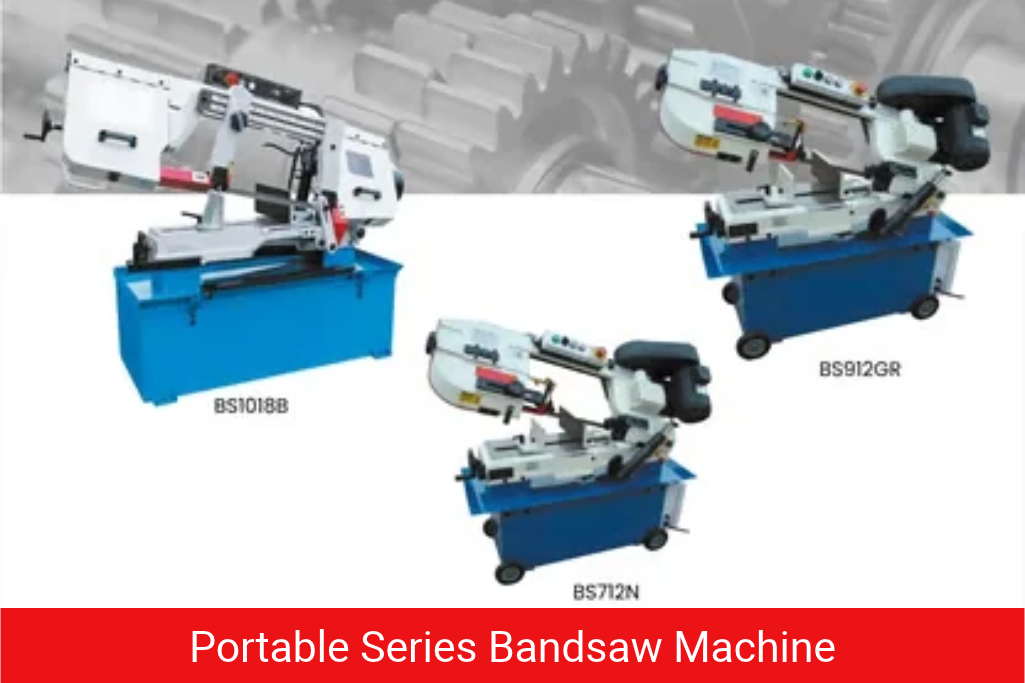
Record Bandsaw Cutting and Return Time
The cutting stroke is only one segment of the full cycle, and timing it separately from loading and clamping helps isolate the actual sawing work.
After a cut completes, the saw frame returns before the next cut can begin, adding time that is easy to overlook when judging output by cutting speed alone. Interruptions, such as blade adjustment or material shifting, should also be noted.
Blade speed, measured in metres per minute, is a machine setting Bhavya Machine Tools lists on its bandsaw specification sheets, not a measure of batch output. A fast setting alone does not tell a workshop how quickly a full batch will be completed.
Include Unloading and Inspection in Metal Sawing Productivity
Cut pieces must be handled and inspected according to the workshop’s process, and may occur after each cut, after several cuts or alongside machine operation.
Accepted and rejected pieces should be separated and tracked, with dimensional checks against the job specification confirming whether a piece meets requirements.
Record inspection waiting time and rework against the batch. Include them in elapsed batch time when they fall within the defined period, and note them separately when they occur outside it.
This stage is distinct from incoming material handling and should be tracked separately.
Our Other Product
Tube Fiber Laser Cutting MachinesGroup Compatible Jobs for Bandsaw Production Planning
Planners can review whether similar jobs can be scheduled together to reduce changeovers, grouping by material grade, size and shape as a common starting point.
Required cut lengths, quantities and blade requirements also influence whether jobs fit well together in sequence.
Delivery priorities will sometimes limit how much grouping is practical. This is an option to test against a workshop’s own production records, since the actual benefit depends on its particular mix of jobs, which is also useful to share when requesting a quote from Bhavya Machine Tools.
Evaluate an Automatic Bandsaw Machine for Your Batch Mix
Deciding whether an automatic bandsaw machine fits a workshop starts with its typical batch mix, since repeated cuts of similar material behave differently from frequently changing jobs in terms of automation benefit.
Operator involvement across the whole workflow, not just at the saw, should be part of this review, including which stages still need an operator and how space and handling fit around the machine.
Bhavya’s published information for the fully automatic PLC control series gives differing descriptions of material feeding between its specification table and feature list, while the semi automatic series lists hydraulic clamping with manual feeding. Buyers should confirm the feeding arrangement directly with Bhavya Machine Tools.
Automated feeding does not mean automated loading, unloading, inspection or sorting, so each function should be confirmed against the machine’s documented features.
 Email!
Bandsaw Machines from Bhavya Machine Tools
Bhavya Machine Tools is a manufacturer, exporter and supplier of machine tools based in Ahmedabad, India, with branches in the USA and UAE. Its bandsaw machine range includes the Double Column Fully Automatic PLC Control Series, a double column automatic bandsaw machine and horizontal bandsaw machine, and the Double Column Semi Automatic Series, a semi automatic bandsaw machine.
Both series share features such as a stress relieved fabricated steel structure, a hard chrome plated ground column and variable pressure control for cutting feed. The company also manufactures laser cutting, press brake, lathe and other workshop machinery alongside its bandsaw machine range.
Bandsaw Machine Productivity: Final Thoughts
Measuring the elapsed batch time and accepted pieces on a bandsaw machine gives a workshop an output per hour figure that supports bandsaw production planning. Consistent records help make metal sawing productivity comparisons meaningful, while differences in material, size and job requirements should also be considered.
Workshops evaluating their setup, or considering an automatic bandsaw machine, are welcome to discuss their material, batch and machine requirements with Bhavya Machine Tools.
Frequently Asked Questions About Bandsaw Productivity
What should a workshop include when measuring bandsaw cycle time?
Bandsaw cycle time can cover the activities defined for one cutting cycle, such as feeding, clamping, cutting and return movement. Buyers can discuss machine functions with Bhavya Machine Tools. Record batch setup, loading, inspection and delays separately when assessing total batch time.
Is setup time included in bandsaw batch output measurement?
Setup time can be included if it falls within the start and end points chosen for the batch measurement. Keep that boundary consistent when comparing batches, and share the details when discussing requirements with Bhavya Machine Tools.
How is accepted bandsaw machine output calculated?
Divide accepted pieces by the total elapsed batch time in hours. This gives an output per hour figure that buyers can include when discussing their requirements with Bhavya Machine Tools.
When should a workshop evaluate an automatic bandsaw machine?
This is worth reviewing once batch quantities, job change frequency and operator involvement are clearly understood, before discussing the details with Bhavya Machine Tools.
What information should buyers share with Bhavya Machine Tools about their batch requirements?
Material type and size, typical batch quantities, required cut tolerances and how often jobs change help Bhavya Machine Tools recommend a suitable configuration.