



AI Summary
Purchasing a CNC panel bender machine is a significant capital investment and selecting the wrong manufacturer can translate into years of operational setbacks, poor after-sales support and costly downtime. With a growing number of panel bending machine manufacturers in India and globally, buyers must apply structured due diligence – not just assess machine specs on paper. This guide walks you through the key evaluation criteria every procurement decision-maker should apply before signing a purchase agreement.
CNC Panel Bender Machine Credentials: Verifying Manufacturer Legitimacy
Before shortlisting any supplier, confirm their legal standing, certifications and production capacity. A credible panel bender manufacturer will hold ISO certifications, CE compliance markings (for export markets) and documented manufacturing audits. Ask for references from existing customers who operate in your industry segment – not just testimonials, but verifiable contact details. Bhavya Machine Tools, for instance, maintains transparent documentation on its product range and client base, which is a standard practice buyers should expect from any serious supplier. Check whether the manufacturer has in-house R&D or solely resells OEM equipment, as this directly affects how quickly they can support technical modifications.
CNC Panel Bending Machine Specifications: Matching Capacity to Your Production Requirements
Many buyers make the mistake of evaluating a CNC panel bending machine purely on maximum bending length or tonnage. Instead, map the machine’s full specification sheet against your actual production matrix – material thickness range, bend radius tolerances, angle repeatability and cycle time per part. Request a live demonstration or a Factory Acceptance Test (FAT) with your own sheet metal samples. Confirm whether the machine supports DXF import, offline programming and automatic tool compensation, as these directly impact your shop floor productivity.
Panel Benders Technology Evaluation: Assessing Automation Depth and Flexibility
Not all panel benders are equal in terms of automation architecture. When evaluating suppliers, distinguish between semi-automatic models and fully integrated automatic panel bender solutions. An automatic CNC metal sheet panel bender typically incorporates a manipulator arm, back gauge system and integrated blank feeding – but the actual automation sequence varies significantly by manufacturer. Scrutinise whether the automation system is proprietary or based on third-party robotics and how it handles part re-gripping for complex geometries. Also evaluate whether the system supports unattended or lights-out operation and what sensors and safeguards govern sheet detection and collision prevention.
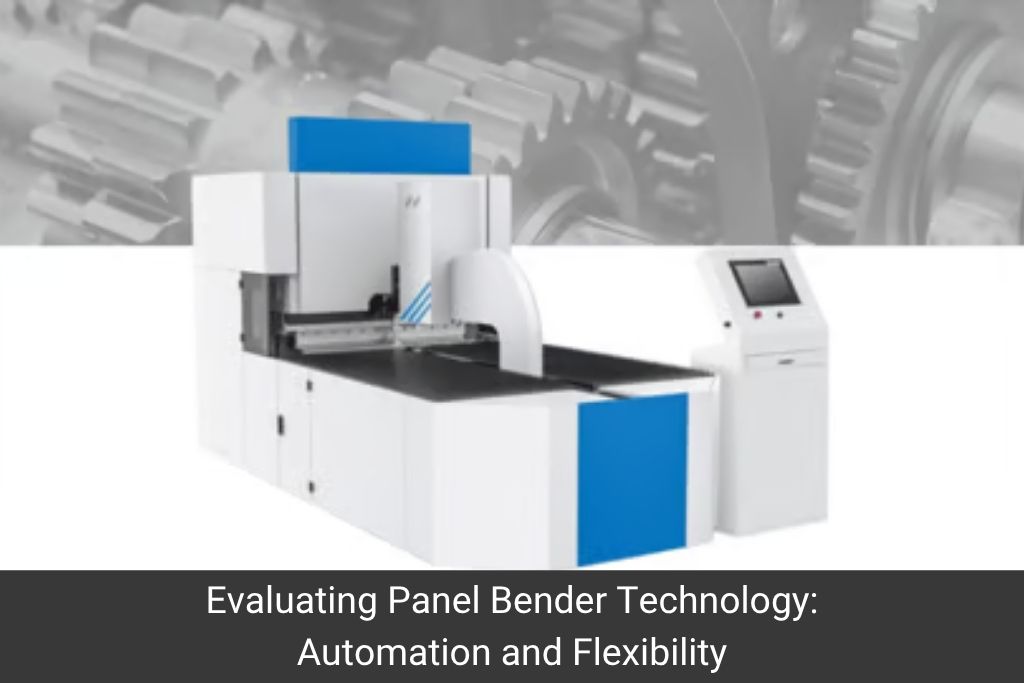
Flexible Panel Bender Configurations: Understanding Tooling Modularity
A flexible panel bender differentiates itself from conventional press brakes through its ability to form multi-bend parts in a single setup without manual repositioning. When assessing this capability, probe the tooling change time, maximum number of sequential bends per program and whether the blade system supports upward and downward bending in the same cycle. Ask the manufacturer to demonstrate forming of your most complex part profile. Evaluate the tool library management system – how many tool stations the machine holds and whether universal tooling is compatible with third-party inserts. A manufacturer that offers application engineering support for tooling optimisation is considerably more valuable than one that only supplies standard configurations.
Our Other Product
Plate Rolling MachinesPanel Bender Manufacturer Support Infrastructure: What Happens After Delivery
Post-installation support is where many panel bending machine manufacturers in India fall short. During supplier evaluation, specifically audit the following: availability of field service engineers within your region, average response time for breakdown calls, remote diagnostic capability via teleservice or connectivity and spare parts stocking policy. Request the standard mean time between failures (MTBF) data for critical components such as the servo drive, back gauge motors and bending blade actuators. Confirm whether the manufacturer offers a structured preventive maintenance contract with defined SLA terms. Bhavya Machine Tools, as a reliable supplier with an established domestic service network, is one example of how localised support can reduce machine downtime significantly compared to imported brands with thin service coverage.
Panel Bending Machine Manufacturers in India: Evaluating Domestic vs. Imported Options
Procurement teams often weigh domestic panel bending machine manufacturers in India against European or Taiwanese imports. The trade-off analysis should cover total cost of ownership – not just unit price. Domestic manufacturers typically offer faster delivery lead times, lower import duty exposure and easier access to on-site service. However, evaluate whether the domestic manufacturer’s CNC control and servo systems are indigenously developed or imported sub-assemblies, as this determines the actual reliability baseline. Look at the manufacturer’s installed base in your target application – automotive component fabrication, HVAC panel production, electrical enclosure forming or elevator panel manufacturing – each of which has distinct accuracy and throughput demands.
What Our Customers Say
“Our production speed has improved ever since we got a Bhavya machine. It’s smooth, durable, and works exactly as promised.”
Arti Mishra On Google
CNC Panel Bender Machine Pricing Transparency: Avoiding Hidden Cost Structures
A credible supplier will provide itemised quotations that clearly separate machine cost, tooling package, installation and commissioning, operator training and annual maintenance contract (AMC) pricing. Be cautious of manufacturers who bundle everything into a single lump-sum figure, as this obscures the true cost of ownership. Confirm the warranty scope in writing – specifically which components are covered, what constitutes warranty exclusions and the process for warranty claims. Also clarify the terms for software updates and CNC controller licensing, as some suppliers charge separately for firmware upgrades.
 Email Us Now!
Conclusion
Choosing the right CNC panel bender machine manufacturer requires a structured evaluation process that goes well beyond comparing brochure specifications. Buyers must assess technical depth, automation architecture, tooling flexibility, post-sale support infrastructure and software integration readiness in parallel. Bhavya Machine Tools demonstrate that domestic manufacturers can meet these criteria competitively when buyers apply the right due diligence framework. Align your procurement decision with long-term operational needs, not just upfront acquisition cost, to maximise the return on your capital investment.
Our Other Product
Pipe/Profile MachinesFAQs on CNC Panel Bender Manufacturer
CNC Panel Bender Manufacturer: A Buyer’s Due Diligence Guide
What certifications should a reliable panel bender manufacturer hold?
Look for ISO 9001 certification, CE compliance for export-standard machines and documented Factory Acceptance Test procedures - these confirm the manufacturer meets established quality and safety benchmarks.
How do I evaluate an automatic CNC metal sheet panel bender before purchase?
Request a live demonstration using your own material samples and verify automation sequences, sensor safeguards and offline programming compatibility with your existing CAD/CAM software.
What distinguishes a flexible panel bender from a standard press brake?
A flexible panel bender performs multi-bend sequences in a single setup without repositioning, supports upward and downward bending in the same cycle and significantly reduces part handling time on complex profiles.
How should I compare panel bending machine manufacturers in India against imported brands?
Evaluate total cost of ownership - factoring in import duties, spare parts lead time, service network density and controller ecosystem compatibility - rather than focusing solely on unit price.
What after-sales support terms should I confirm before buying a CNC panel bending machine?
Confirm field service response time SLAs, remote teleservice capability, spare parts availability timelines, preventive maintenance contract terms and whether critical consumable components are stocked locally.