



AI Summary: Fiber laser cutting quality and productivity depend on selecting suitable parameters such as laser power, cutting speed, focus position, assist gas and nozzle selection according to material type and thickness. Correct parameter selection improves cutting accuracy, edge quality, kerf consistency and material utilisation while reducing dross, burrs and rework. Actual settings vary by machine capability, material grade and required finish. Bhavya Machine Tools helps manufacturers identify suitable parameters for consistent, production ready results.
Understanding Fiber Laser Cutting Parameters
Cutting quality, production speed and material utilisation in fiber laser cutting depend on how correctly power, speed, focus position, assist gas and nozzle settings are matched to the material being processed. Manufacturers who understand these parameters can reduce dross, burrs and rework while achieving consistent, repeatable results. This article explains each parameter in practical terms and what buyers should consider when selecting a fiber laser cutting machine. Bhavya Machine Tools helps fabrication companies and engineering manufacturers match parameter selection to real production requirements.
What Are Fiber Laser Cutting Parameters?
Fiber laser cutting parameters are the group of settings that determine how a fiber laser cutting machine interacts with a material during the cutting process. These include laser power, cutting speed, focus position, assist gas type, gas pressure and nozzle selection. Each of these settings directly influences cutting accuracy, edge quality, kerf width, dross formation and overall production efficiency.
Understanding fiber laser cutting parameters is essential for manufacturers, fabricators and engineering companies that depend on clean cuts, consistent component quality and predictable production output. A fiber laser cutting machine can only perform as well as the parameters programmed into it. Two machines with identical specifications can produce very different results depending on how power, speed, focus and gas settings are configured for the material being processed.
For manufacturers evaluating an industrial laser cutting machine, understanding these parameters is also useful before finalising a purchase, since the correct combination of settings depends on the material range, thickness range and quality expectations of the intended application. Bhavya Machine Tools works with sheet metal fabrication companies, automotive component manufacturers and engineering companies across India to match fiber laser cutting parameters to real production requirements rather than offering a single fixed configuration for every application. As a fiber laser cutting manufacturer, Bhavya Machine Tools views parameter selection as an application specific exercise, not a generic setting applied across every job.
 Email!
Fiber Laser Power: How Laser Wattage Affects Cutting Performance
Laser power, measured in watts, determines how much energy is delivered to the material and directly affects how thick a material can be cut, how fast the cut can be completed and how clean the resulting edge will be. Higher fiber laser power allows thicker material to be processed and generally supports faster cutting speeds on a given thickness, but power alone does not guarantee good results.
The relationship between wattage, thickness and speed works as follows.
- Low power machines are suited to thin gauge sheet metal where precision and edge finish matter more than raw cutting speed.
- Mid power machines balance thickness capability with speed across common fabrication thicknesses.
- High power machines are needed for thicker plate and heavy fabrication work, since insufficient power at greater thickness leads to incomplete penetration.
Selecting power based only on maximum thickness capability without accounting for typical daily production needs can result in a machine that is either underused or unable to meet future thickness requirements. Bhavya Machine Tools helps customers evaluate their current material thickness range alongside expected future manufacturing needs so that laser power selection supports both present jobs and anticipated growth, rather than requiring a machine upgrade within a short period.
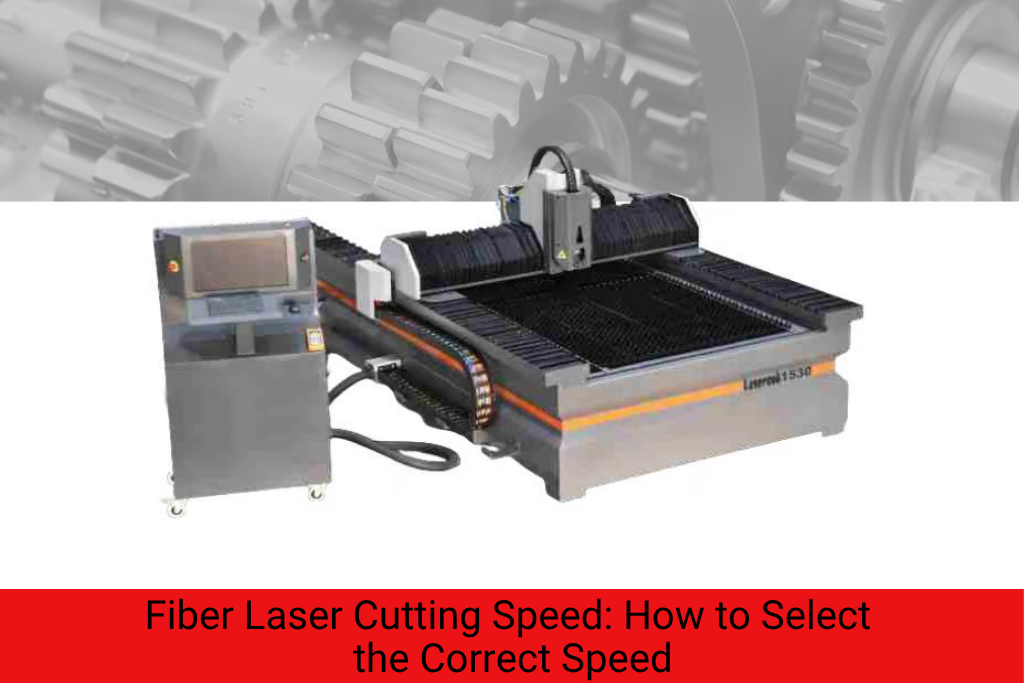
Fiber Laser Cutting Speed: How to Select the Correct Speed
The correct cutting speed for a given job is the fastest speed at which the laser can fully penetrate the material while still producing an acceptable edge finish, which typically means running slightly below the maximum speed the power and thickness combination can support. Cutting speed and laser power must be matched to the material thickness, since running speed too high in relation to power results in incomplete cuts, while running speed too low increases heat input.
Higher speed does not always mean better productivity. When cutting speed is set too high for the available power and thickness, common problems include:
- Incomplete cutting or dross remaining on the underside of the cut
- Rough or striated edge appearance
- Reduced dimensional accuracy on finished parts
- Additional rework or secondary finishing requirements that offset any time saved
Conversely, cutting speed set too low increases heat input into the material, which can widen the kerf, enlarge the heat affected zone and reduce overall throughput without improving quality. Production planning should treat cutting speed as a quality and productivity balance rather than a single maximisation target. Bhavya Machine Tools supports customers in trial cutting representative material samples so that speed settings are validated against real edge quality expectations before full scale production begins.
Laser Cutting Focus Position and Its Effect on Cut Quality
Focus position refers to the point along the laser beam where energy density is highest, and its placement relative to the material surface has a significant effect on penetration and edge quality. The focus point can be set at the material surface, above the surface or below the surface, and the correct position depends on both material type and thickness.
- A focus position at or slightly above the surface is commonly used for thinner materials and finer detail cutting, supporting a narrower kerf and cleaner top edge.
- A focus position set deeper into the material is often used for thicker plate, helping maintain beam energy through the full material depth for complete penetration.
Incorrect focus position is one of the most common causes of inconsistent cut quality, including uneven edges, incomplete penetration on thicker sections and increased dross. Focus position also interacts with nozzle standoff distance and lens condition, so even correctly calculated settings can underperform if the cutting head is not properly maintained. Bhavya Machine Tools guides customers through practical focus setting procedures during machine commissioning and operator training, helping production teams achieve accurate, repeatable edge quality across different jobs rather than relying on trial and error on the shop floor.
Assist Gas Selection for Fiber Laser Cutting
Assist gas performs two functions during fiber laser cutting: it helps eject molten material from the kerf and, depending on the gas type, it can also chemically assist or suppress the cutting reaction. Selecting the correct assist gas for a given material and finish requirement is one of the most important fiber laser cutting parameters because it directly affects cutting speed, edge appearance and operating cost.
The main assist gases used in fiber laser cutting are oxygen, nitrogen and compressed air, each suited to different materials and quality requirements. Gas pressure must also be matched to material thickness and nozzle diameter, since incorrect pressure can cause turbulence in the cut, leading to rough edges or excess dross even when power, speed and focus are correctly set.
Bhavya Machine Tools advises customers on assist gas selection based on the specific combination of material, thickness and finish requirement for their components, since a single default gas setting is rarely suitable across mixed production involving different materials.
Oxygen vs Nitrogen vs Air for Fiber Laser Cutting
Each assist gas produces different cutting characteristics, and understanding these differences helps buyers set realistic expectations for cutting quality, speed and running cost.
- Oxygen reacts exothermically with the material, which increases cutting speed on carbon and mild steel and supports thicker section cutting, but it also produces an oxidised, discoloured cut edge that may require additional finishing for applications where surface appearance matters.
- Nitrogen is an inert gas that produces a clean, oxide free edge suitable for stainless steel and aluminium applications where surface finish is critical, though it typically requires higher gas pressure and results in higher gas consumption cost compared with oxygen cutting.
- Compressed air offers a lower cost alternative to nitrogen for certain thin to medium gauge applications where edge finish requirements are moderate, making it attractive for high volume production where gas cost significantly affects overall part cost.
Choosing between oxygen, nitrogen and air ultimately depends on the material being cut, the required edge appearance and the acceptable operating cost per part. Bhavya Machine Tools helps customers compare these tradeoffs against their actual component drawings and finish specifications so that gas selection supports both quality requirements and production budget rather than defaulting to a single gas across all jobs.
Our Other Product
Mechanical Electric Shearing Machine (MSC Series)Fiber Laser Cutting Parameters for Mild Steel
Mild steel is commonly cut using oxygen assist gas because the exothermic reaction between oxygen and iron increases cutting speed and supports efficient processing of thicker sections. Fiber laser cutting parameters for mild steel typically involve moderate to high power settings depending on thickness, with cutting speed calibrated to avoid dross formation along the bottom edge of the cut.
Nitrogen can also be used on mild steel where a cleaner, weld ready edge without oxide scale is required, though this generally means slower cutting speeds and higher gas cost compared with oxygen cutting on the same thickness. Sheet metal fabrication companies producing components for painting, powder coating or welding often need to decide between these two approaches based on downstream processing requirements.
Bhavya Machine Tools supports mild steel fabricators and general manufacturing companies by helping identify whether oxygen or nitrogen cutting better suits their finishing process, since this decision affects both parameter selection and overall production cost for high volume mild steel work.
Fiber Laser Cutting Parameters for Stainless Steel
Stainless steel is typically cut using nitrogen assist gas to preserve corrosion resistance and produce an oxide free edge, since oxygen cutting would leave a discoloured, oxidised surface that compromises the material’s corrosion resistant properties. Fiber laser cutting parameters for stainless steel generally require higher gas pressure than mild steel cutting, along with careful focus position control to manage the higher thermal conductivity and reflectivity characteristics of the material.
Component manufacturers producing stainless steel parts for food processing equipment, electrical enclosure manufacturing and hygienic applications depend on clean, oxide free edges that meet strict surface finish standards. Achieving this consistently requires accurate parameter control across power, speed, focus and nitrogen pressure settings.
Bhavya Machine Tools works closely with stainless steel fabricators and electrical enclosure manufacturers to establish parameter settings that maintain corrosion resistance and surface finish while keeping nitrogen consumption within a practical operating cost for the required production volume.
Fiber Laser Cutting Parameters for Aluminium
Aluminium presents distinct cutting challenges due to its high reflectivity and thermal conductivity, which require careful power and focus control to achieve clean penetration without excessive heat spread. Fiber laser cutting parameters for aluminium generally rely on nitrogen assist gas to prevent oxidation and maintain a bright, weld ready edge, along with precise focus position to manage the material’s tendency to reflect and conduct heat away from the cutting zone.
Automotive component manufacturers and HVAC component manufacturers frequently process aluminium sheet for lightweight assemblies, ducting and structural brackets, where dimensional accuracy and consistent edge quality directly affect downstream assembly and welding operations. Incorrect parameter settings on aluminium can lead to excessive dross, edge burning or inconsistent kerf width across a production run.
Bhavya Machine Tools assists automotive and HVAC manufacturers in validating aluminium cutting parameters against their specific alloy grades and thickness ranges, since aluminium alloys can behave differently under the same nominal settings depending on their exact composition.
Fiber Laser Cutting Parameters for Brass and Copper
Brass and copper are highly reflective and highly thermally conductive materials that require specific power and focus adjustments compared with steel and aluminium cutting. These materials can be more challenging to cut consistently with fiber lasers, particularly at higher thicknesses, since reflected laser energy can affect cutting head components if parameters and safety settings are not correctly configured.
Fiber laser cutting parameters for brass and copper generally require higher relative power for a given thickness compared with steel, along with nitrogen assist gas to control oxidation and maintain a consistent edge appearance. Electrical component manufacturers and engineering companies working with brass and copper for connectors, terminals and conductive parts need precise, repeatable parameters to maintain electrical and dimensional specifications across production batches.
Bhavya Machine Tools advises customers processing brass and copper on suitable machine configurations and parameter ranges for these reflective materials, helping avoid common issues that arise when settings developed for steel are applied without adjustment to non ferrous, highly conductive materials.
Read Our Article
Electric Panel Bender’s Industrial ApplicationsRelationship Between Laser Power, Cutting Speed and Material Thickness
Laser power, cutting speed and material thickness are interdependent, and adjusting one without accounting for the others generally leads to poor results. As material thickness increases, either laser power must increase, cutting speed must decrease, or both, in order to maintain complete penetration and acceptable edge quality.
This relationship can be summarised as follows.
- For a fixed power setting, increasing thickness requires reducing cutting speed to maintain adequate penetration.
- For a fixed thickness, increasing power generally allows faster cutting speed without sacrificing edge quality.
- Beyond a certain thickness for a given power level, no speed reduction will fully compensate, and incomplete cutting or excessive dross will result.
Manufacturers planning production across a range of thicknesses need to understand this relationship when evaluating machine capability, since a machine specified only for its maximum thickness rating may not deliver efficient cutting speeds across the thinner materials that make up daily production. Bhavya Machine Tools helps buyers map their expected thickness range against realistic power and speed combinations, ensuring the selected fiber laser cutting machine performs efficiently across the full range of jobs rather than only at its rated maximum.
How Nozzle Diameter Affects Fiber Laser Cutting Performance
Nozzle diameter controls how the assist gas stream is directed onto the material and has a direct effect on cutting quality, kerf width and gas consumption. Smaller nozzle diameters concentrate the gas stream for finer, more precise cutting on thinner materials, while larger nozzle diameters are generally used for thicker materials where a wider gas flow is needed to clear molten material effectively from the cut.
Nozzle selection must also be matched to gas pressure and standoff distance, since an incorrectly sized nozzle can cause turbulent gas flow, leading to rough edges, inconsistent dross removal or increased gas consumption without a corresponding improvement in cut quality. Nozzle condition also matters, since a worn or damaged nozzle can produce inconsistent results even when all other parameters are correctly set.
Bhavya Machine Tools guides operators on selecting and maintaining appropriate nozzle sizes for their typical material and thickness range, and provides support on nozzle replacement schedules so that cutting consistency is maintained across long production runs.
How Laser Cutting Parameters Affect Kerf Width and Edge Quality
Kerf width, the amount of material removed by the laser during cutting, is influenced by nozzle diameter, focus position, power and cutting speed together. A narrower, more consistent kerf generally indicates well matched parameters and supports tighter dimensional tolerances, while a widening or inconsistent kerf across a cut often signals a parameter mismatch or equipment condition issue.
Edge quality is affected by the same parameter group. Clean, consistent edges with minimal striation typically result from correctly balanced power, speed, focus and gas pressure, while visible striation lines, rough texture or oxide discolouration point to specific parameter or gas selection issues that can usually be corrected through targeted adjustment.
Manufacturers requiring consistent component quality across large production runs depend on stable kerf width and edge quality to avoid downstream assembly problems and rework. Bhavya Machine Tools helps production teams establish parameter documentation for their common jobs, recording proven power, speed, focus and gas settings for each material and thickness combination so that kerf width and edge quality remain consistent between operators and shifts.
Our Other Product
Plate Rolling MachinesHow Incorrect Laser Parameters Cause Dross, Burrs and Poor Cut Quality
Incorrect fiber laser cutting parameters are the most common cause of dross, burr formation and general poor cut quality in production environments. Understanding the typical cause of each issue helps operators correct problems quickly rather than adjusting settings by trial and error.
- Excessive dross usually indicates cutting speed too high for the power and thickness combination, insufficient gas pressure or incorrect focus position.
- Burr formation along the cut edge often points to worn nozzles, incorrect standoff distance or gas pressure that is too low to properly clear molten material.
- Incomplete cutting typically results from insufficient power for the material thickness, cutting speed set too high or focus position placed incorrectly for the material.
- Excess heat input and enlarged heat affected zones generally result from cutting speed set too low relative to power, causing the material to absorb more thermal energy than necessary.
- Poor dimensional accuracy can stem from inconsistent kerf width caused by any of the above parameter mismatches, compounded by machine condition issues such as lens contamination or nozzle wear.
Correcting these issues generally requires reviewing the full parameter set together rather than adjusting a single setting in isolation, since power, speed, focus and gas settings all interact. Bhavya Machine Tools provides after sales technical support to help customers diagnose recurring quality issues and correct parameter combinations, reducing scrap and rework in ongoing production.
How to Optimize Fiber Laser Cutting Parameters for Productivity
Optimising fiber laser cutting parameters for productivity means finding the fastest reliable cutting speed for each material and thickness combination that still meets the required edge quality and dimensional accuracy, rather than simply maximising speed. A structured optimisation approach typically involves the following steps.
- Establish baseline parameters for each material and thickness using manufacturer guidance and initial trial cuts.
- Evaluate edge quality, dross level and dimensional accuracy against production requirements.
- Incrementally adjust speed, power or gas pressure and re evaluate results until an efficient, repeatable setting is confirmed.
- Document confirmed parameters for each material and thickness combination to maintain consistency across operators.
- Periodically review parameters as nozzle condition, lens condition or material batch characteristics change.
Reducing process variation through documented, validated parameters also supports better machine utilisation, since less time is spent on rework, re cutting or manual adjustment between jobs. Bhavya Machine Tools works with production teams to build this kind of parameter reference library during commissioning and ongoing service visits, helping customers achieve consistent throughput improvements without compromising cutting quality.
AI Based Fiber Laser Cutting Parameter Optimization
Modern fiber laser cutting machines increasingly include software assisted or AI based parameter recommendation features that suggest starting power, speed, focus and gas settings based on material type and thickness input by the operator. These systems can reduce setup time and help less experienced operators achieve reasonable results more quickly, though recommended settings generally still require fine tuning based on actual machine condition, material batch variation and specific finish requirements.
AI based optimisation tools are most useful as a starting point rather than a final answer, since factors such as lens wear, nozzle condition and gas supply quality are specific to each machine and cannot be fully accounted for by a generic recommendation engine. Manufacturers evaluating machines with these features should understand that software assistance complements, rather than replaces, proper parameter validation and operator training.
Bhavya Machine Tools advises customers on how to use software assisted parameter tools effectively alongside practical validation on their own material stock, so that recommended settings are confirmed against real production conditions before being used for full batch runs.
Fiber Laser Cutting Parameter Chart by Material and Thickness
Actual fiber laser cutting parameters vary considerably depending on machine power, lens condition, material quality, nozzle selection, gas pressure, cutting head condition and required edge quality, so the ranges below are intended as a general reference rather than fixed universal values. Production requirements and available machine capability should always be confirmed before finalising settings for a specific job.
|
Material |
Thickness |
Laser Power |
Cutting Speed |
Assist Gas |
Focus Position |
Nozzle |
|
Mild Steel |
1 to 3 mm |
1000 to 2000 W |
High |
Oxygen |
At or near surface |
Small diameter |
|
Mild Steel |
6 to 12 mm |
3000 to 6000 W |
Moderate |
Oxygen |
Below surface |
Medium diameter |
|
Stainless Steel |
1 to 3 mm |
1500 to 3000 W |
High |
Nitrogen |
At or near surface |
Small diameter |
|
Stainless Steel |
6 to 10 mm |
4000 to 8000 W |
Moderate |
Nitrogen, high pressure |
Below surface |
Medium to large diameter |
|
Aluminium |
1 to 3 mm |
2000 to 4000 W |
Moderate to high |
Nitrogen |
Near surface |
Small to medium diameter |
|
Aluminium |
6 to 10 mm |
4000 to 8000 W |
Moderate |
Nitrogen, high pressure |
Below surface |
Medium to large diameter |
|
Brass and Copper |
1 to 3 mm |
2000 to 4000 W |
Moderate |
Nitrogen |
Near surface |
Small to medium diameter |
These ranges illustrate general trends only. Precise settings for a given job should always be validated on the actual machine and material stock being used. Bhavya Machine Tools provides sample cutting support so that customers can confirm suitable parameter combinations for their specific material grades and thickness range before committing to full production settings, including for less common combinations such as thicker brass and copper sections not shown above.
Read Our Article
CNC Lathe Machine Price Factors That Affect CostSelecting the Right Fiber Laser Cutting Machine and Parameters
Consistent, high quality fiber laser cutting results depend on matching laser power, cutting speed, focus position, assist gas and nozzle selection to material type, thickness and required finish, rather than applying one fixed setting across every job. Manufacturers who validate and document these parameters achieve better edge quality, reduced rework and stronger machine utilisation over time. Bhavya Machine Tools helps fabrication companies and engineering manufacturers identify suitable parameter combinations and select a fiber laser cutting machine matched to their actual production requirements.
Fiber Laser Cutting Parameters: Frequently Asked Questions
Fiber Laser Cutting Parameters: Power, Speed, Focus and Gas Settings Explained
What are the most important fiber laser cutting parameters to control?
<span style="font-weight: 400;">The most important parameters are laser power, cutting speed, focus position, assist gas type and gas pressure, along with nozzle selection. These settings work together and must be matched to material type and thickness for consistent results.</span>
How do I choose the correct laser power for fiber laser cutting?
<span style="font-weight: 400;">Laser power should be selected based on the maximum material thickness in your production mix and the cutting speed required for efficient throughput, not based on maximum thickness alone. Bhavya Machine Tools helps buyers evaluate their full thickness range before recommending a suitable power level.</span>
How much does cutting speed affect fiber laser cutting quality?
<span style="font-weight: 400;">Cutting speed set too high for the power and thickness combination causes incomplete cutting and dross, while speed set too low increases heat input and can widen the kerf. Correct speed balances productivity with acceptable edge quality.</span>
Which assist gas is best for fiber laser cutting stainless steel?
<span style="font-weight: 400;">Nitrogen is generally used for stainless steel to preserve corrosion resistance and produce an oxide free edge, though it requires higher gas pressure and cost compared with oxygen cutting used on mild steel.</span>
How does focus position affect fiber laser cutting results?
<span style="font-weight: 400;">Focus position affects penetration depth and edge quality. Positioning closer to the surface suits thinner materials and finer detail, while a deeper focus position generally supports thicker material cutting.</span>
Why does my fiber laser cutting machine produce excessive dross?
<span style="font-weight: 400;">Excessive dross is commonly caused by cutting speed set too high, insufficient gas pressure or incorrect focus position for the material and thickness being cut. Reviewing these settings together usually resolves the issue.</span>
How do fiber laser cutting parameters differ between materials?
<span style="font-weight: 400;">Parameters vary significantly between mild steel, stainless steel, aluminium, brass and copper due to differences in reflectivity, thermal conductivity and oxidation behaviour, which affect suitable power, speed and gas selection for each material.</span>
Where can I find a fiber laser cutting machine manufacturer in India for parameter guidance?
<span style="font-weight: 400;">Bhavya Machine Tools is a fiber laser cutting machine manufacturer and supplier in India that provides parameter guidance, sample cutting support and after sales technical assistance to help customers achieve consistent cutting results.</span>
What information should I share with Bhavya Machine Tools before selecting a fiber laser cutting machine?
<span style="font-weight: 400;">Buyers should share their material type, material thickness range, component details, required cutting quality, production quantity and any automation requirements, so that Bhavya Machine Tools can recommend suitable machine capability and parameter guidance for the intended application.</span>
How many nozzle sizes are typically needed for mixed material production?
<span style="font-weight: 400;">Manufacturers cutting a range of thicknesses and materials generally need multiple nozzle diameters, since nozzle selection affects kerf width, gas flow and edge quality differently across thin and thick material ranges.</span>
Which industries commonly require different fiber laser cutting parameter settings?
<span style="font-weight: 400;">Sheet metal fabrication companies, automotive component manufacturers, electrical enclosure manufacturers, HVAC component manufacturers and heavy fabrication industries all require different parameter approaches based on their typical materials, thicknesses and finish requirements.</span>
How can I improve machine utilisation through better parameter selection?
<span style="font-weight: 400;">Documenting validated parameters for each material and thickness combination reduces setup time, rework and re cutting, which directly improves machine utilisation and overall production repeatability. Bhavya Machine Tools assists customers in building this kind of parameter reference during commissioning and ongoing service support.</span>