



AI Summary: Choosing between a Heavy-Duty Lathe Machine and a Medium-Duty Lathe Machine comes down to three factors: load capacity, bed length and swing over bed. The heavy duty lathe machine category handles larger, tougher workpieces and rough cutting operations, suited to units producing shafts, flanges and large industrial components. The medium duty lathe machine works best for precision jobs, smaller batch sizes and workshops with limited floor space or budget. This article compares both Lathe Machines across capacity, dimensions and return on investment (ROI), so manufacturing units can pick the right fit instead of paying for capability they don’t use.
Why Does the Right Lathe Machine Choice Matter for a Manufacturing Unit?
Every manufacturing unit buys a lathe expecting years of reliable output. Picking the wrong category – too heavy for the job or too light for the load – leads to wasted capital or constant bottlenecks. The specification sheet alone rarely tells the full story; load capacity, bed length and swing over bed do.
What Load Capacity Should You Expect from a Heavy-Duty Lathe Machine?
Load capacity is the maximum weight a workpiece can safely rotate under, between centers or in the chuck, along with the depth of cut the machine can sustain without vibration or tool deflection. It’s usually the first filter manufacturing units apply when shortlisting options.
A heavy duty lathe machine is built with a reinforced bed, larger spindle bore and higher horsepower motor to support loads from a few hundred kilograms up to several tonnes, suited to continuous, high-torque cutting on forged steel and cast iron. A medium-duty lathe machine is engineered for lighter loads – auto parts, general engineering components and job-work – where the cutting load stays moderate and consistent.
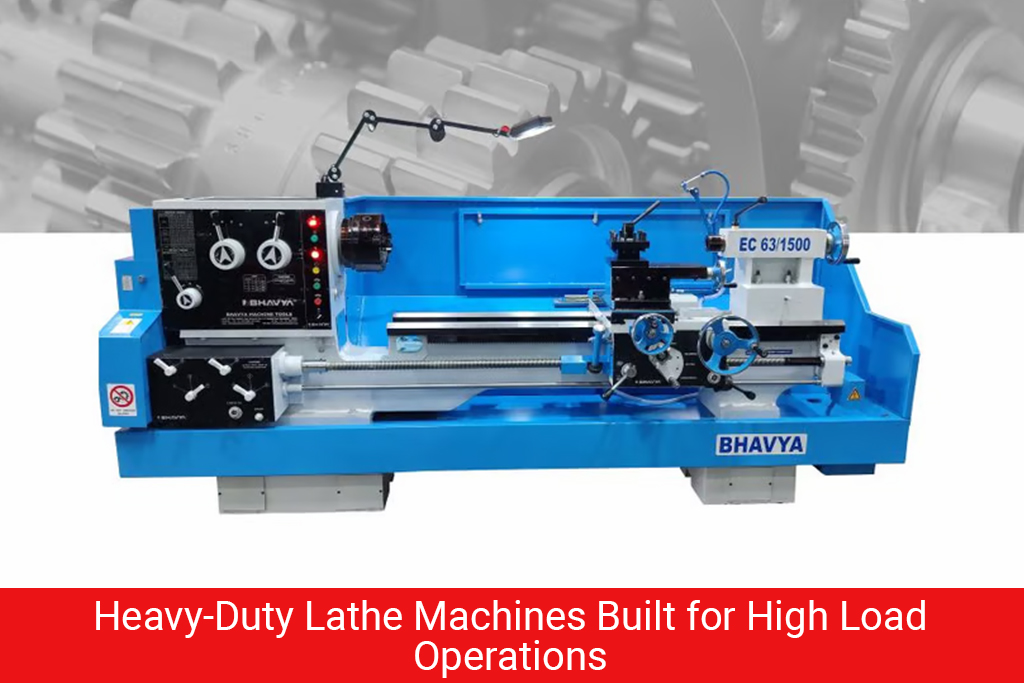
More capacity doesn’t always mean more output. Running small components on an oversized machine reduces efficiency, since the machine’s mass and power aren’t matched to the job. Size the load capacity to your actual component range, not the heaviest job you might occasionally take on.
How Does Bed Length Differ Between a Medium-Duty and Heavy-Duty Lathe Machine?
Bed length is the total length of the guideways and it sets the maximum component length you can turn in one setup. It also decides your floor space requirement.
Units that regularly turn long shafts, spindles or rods need the extended bed found on heavier models, avoiding multiple setups and alignment errors. For shorter components – bushings, couplings, small flanges – a compact bed is an advantage instead of a limitation: smaller footprint, less idle travel and a lower upfront investment without sacrificing accuracy.
What is Swing over Bed and How Do You Size It Correctly?
Swing over bed is the maximum workpiece diameter that can rotate over the bed without touching it – one of the most misread specifications, since catalogues list it differently across manufacturers.
How to calculate the swing over bed you need:
- List your largest recurring diameter, the one machine use most often, not a rare exception.
- Add clearance for chuck jaws, fixtures or faceplates that increase the effective diameter.
- Check catalogue swing, not carriage swingas carriage swing figures are always smaller than bed swing.
- Match it to the right category, if the required clearance exceeds a standard medium-duty lathe machine, move up to the heavier one.
Under sizing swing over bed causes problems later: the unit either turns away future orders or ends up buying a second, heavy-duty lathe machine sooner than planned.
Which Lathe Machine Delivers Better ROI for Your Production Environment?
For units producing large, heavy parts in continuous runs, the heavier category typically pays back faster despite its higher price – it avoids overload downtime, cuts tool breakage on tough materials and brings bigger jobs in-house instead of outsourcing them. Units with smaller batch sizes, tighter tolerances or mixed product lines usually see quicker payback from the lighter category, thanks to a lower purchase price, lower power draw and smaller footprint.
Our Other Product
Press MachinesHow to calculate ROI before purchase:
- Estimate monthly production volume in spindle run-time, not just piece count.
- Compare energy and maintenance costs across both categories over a 3–5 year horizon.
- Factor in outsourcing costs avoidedwhere jobs currently sent out that the new machine could bring in-house.
- Divide total cost by projected monthly savings to get a realistic payback period, then compare that figure across categories.
A lower purchase price doesn’t guarantee a better ROI. It can look attractive on paper but stretch the payback period if the machine can’t handle your job mix efficiently. Measure ROI against your production environment, not the invoice alone.
Bhavya Machine Tools: Lathe Machine Manufacturer in India
Bhavya Machine Tools is based in India, offering heavy-duty and medium-duty lathe machine models built for production environments ranging from workshops to large-scale industrial units. As an established supplier, the company works directly with manufacturing units to match specifications – load capacity, bed length, swing over bed – to actual production needs rather than one-size-fits-all configurations. Buyers looking to buy lathe machine units can review current models, specifications and pricing directly through the company’s catalogue.
 Email!
Conclusion
The choice between the two categories isn’t about which one is “better” – it’s about which one matches your unit’s actual production profile. Load capacity determines what you can cut, bed length determines what you can hold in one setup and swing over bed determines the diameters you can turn. Once these three specifications are mapped against your real component range, the ROI comparison usually makes the right choice clear on its own.
FAQs
Heavy-Duty Lathe vs. Medium-Duty Lathe: Which One Does Your Manufacturing Unit Need?
What is the basic difference between the two categories?
The core difference lies in load capacity, bed length and swing over bed - the heavier category handles larger, tougher components, while the lighter one suits precision-focused work.
Can a medium-duty machine be upgraded later for heavier jobs?
Generally no. Bed strength, spindle bore and motor capacity are built into the design, so upgrading load capacity after purchase isn't practical - this is why sizing the machine correctly at the buying stage matters.
How do I find reliable lathe machine suppliers in India?
Look for a supplier with a documented range of both machine categories, transparent specification sheets and after-sales support, rather than relying on price comparison alone.
Does a heavier machine always mean a higher lathe machine price?
Yes, load capacity, bed length and swing over bed directly influence build cost, so heavy-duty models are generally priced higher than medium-duty ones, though the gap varies by manufacturer and configuration.
What should I check before I buy a lathe machine for my unit?
Confirm your typical component weight, length and diameter range against the load capacity, bed length and swing over bed specifications and calculate ROI based on your actual production volume rather than the machine's maximum rated capability.