



Choosing the Right Threading Machine – Bolt Threading vs. Hydraulic Thread & Form Rolling
When selecting the right threading equipment for industrial manufacturing, understanding the distinction between a bolt threading machine and a hydraulic thread & form rolling machine is essential. Both machines serve threading purposes, yet they differ significantly in their working principles, output quality, material compatibility and production suitability. This comparison helps manufacturers, procurement engineers and production managers make informed decisions.
Bolt Threading Machine: How It Works and Where It Fits
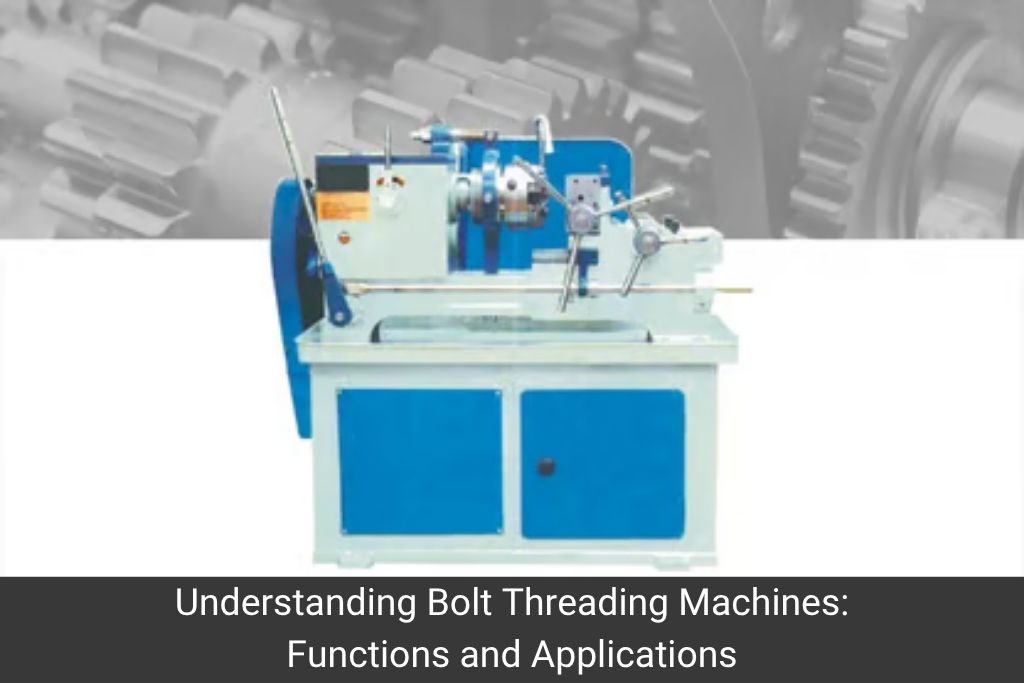
A bolt threading machine cuts threads into fasteners – primarily bolts, screws and studs – using die heads or chasers that remove metal to form the thread profile. This subtractive process is straightforward and widely used in job shops, workshops and small-to-medium production lines where flexibility across different thread sizes is a priority.
The machine accommodates a broad range of thread standards including metric (IS/DIN), UNC, UNF, BSP and Whitworth. It handles mild steel, stainless steel and alloy steel, making it versatile for general-purpose fastener manufacturing. Operators can change die heads quickly to switch between thread profiles, which supports batch production with frequent changeovers.
Bhavya Machine Tools, a reliable manufacturer of industrial threading equipment, offers bolt threading machines designed for reliable threading across standard and custom specifications. Their machines are commonly used in bolt manufacturing plants, piping and plumbing workshops, construction hardware production and agricultural equipment manufacturing – sectors where high thread volume with variable specifications is routine.
One operational characteristic of this threading machine type is that the cutting process generates chips and involves tool wear over time, requiring periodic die replacement. The threads produced are functional and dimensionally accurate, though surface finish and tensile strength may not match those achieved through the rolling process.
Read Our Article
All About Threading MachineHydraulic Thread & Form Rolling Machine: Working Principle and Strengths
A hydraulic thread & form rolling machine forms threads through cold working – a pressure-based process where hardened dies displace material rather than remove it. This grain flow preservation distinguishes rolling from cutting, directly impacting the mechanical properties of the finished thread.
The cold forming process compresses and strengthens the thread root zone, resulting in threads with higher fatigue resistance, better surface hardness and improved tensile strength compared to cut threads. The thread form geometry is highly consistent across every cycle, which is critical in precision industries where thread integrity directly affects joint reliability and safety performance.
Bhavya Machine Tools manufactures hydraulic thread & form rolling machines suited for medium to high-volume production of precision fasteners, aerospace components, automotive bolts and structural anchors. The hydraulic actuation system ensures uniform rolling pressure throughout the cycle, which reduces dimensional variation and enhances repeatability – a significant advantage in ISO-certified and export-oriented manufacturing environments.
The machine processes harder materials with greater efficiency since cold working is less tool-intensive than cutting under high hardness conditions. Typical materials include carbon steel, alloy steel, stainless steel and titanium alloys – all used extensively in load-bearing applications.
What Our Customers Say
“Our production speed has improved ever since we got a Bhavya machine. It’s smooth, durable, and works exactly as promised.”
Arti Mishra On Google
Thread Quality and Mechanical Performance: Cut Threading vs. Cold Form Rolling
The most consequential difference between these two threading machine types lies in the resulting thread quality. Cut threads produced by a bolt threading machine have interrupted grain flow at the thread root, which is structurally acceptable for standard fasteners used in non-critical assemblies.
In contrast, threads produced by a hydraulic thread & form rolling machines retain continuous grain flow through the thread profile. This creates a thread root that is stronger than the parent material, making rolled threads the preferred choice in high-stress applications – such as aerospace fasteners, automotive drivetrain bolts, pressure vessel studs and structural anchor bolts.
From a surface finish standpoint, rolling achieves values significantly lower than cutting, reducing friction and improving sealing performance in hydraulic fittings, fluid connectors and pipe joints where thread contact area matters.
Our Other Product
Drilling MachinesThreading Machines: Production Speed, Cycle Time and Cost Economics
For high-volume production runs with consistent specifications, a hydraulic thread & form rolling machine offers faster cycle times per part once set up, with minimal material waste since no metal is removed. This translates to better raw material utilisation – a measurable cost advantage at scale.
A bolt threader, however, offers lower initial investment and faster setup for small batches or mixed-specification orders. Tooling changeover is simpler and operators require less specialised training. For workshops handling multiple thread standards in small quantities, this threading machine type remains economically practical.
The break-even point between the two generally falls around production volume and thread specification consistency. High-volume, single-specification production favours rolling; mixed-volume, variable-specification environments favour cutting.
Industry-Wise Applications: Bolt Threading Machine vs. Thread Rolling Machine
Bolt threading machines are predominantly found in: hardware and fastener workshops, construction bolt manufacturing, plumbing and pipeline fittings production and general engineering job shops. Their adaptability across thread standards supports diverse client requirements without major retooling.
Hydraulic thread & form rolling equipment serve precision-oriented sectors including: automotive and heavy vehicle component manufacturing, defence and aerospace fastener production, wind energy and power transmission equipment, oil and gas well equipment and medical device manufacturing where thread integrity is safety-critical.
Bhavya Machine Tools supplies both machine types and configures them to client-specific thread standards, production volumes and material grades – supporting manufacturers across these industries with purpose-matched threading solutions.
Read Our Article
What to Look for When Shopping for Bolt Threading Machines?Threading Equipment: Setup, Operator Skill and Maintenance
Operating a bolt threading machine demands basic knowledge of die selection, speed settings and cutting fluid application. Maintenance is straightforward, involving die replacement and routine lubrication.
A hydraulic thread & form rolling machine requires more precise die alignment, hydraulic pressure calibration and an understanding of material spring back during cold forming. The tooling (rolling dies) has a significantly longer service life than cutting dies, often processing hundreds of thousands of parts before replacement – reducing downtime and consumable costs in high-volume facilities.
 Email Us Today!
Conclusion
Choosing between a bolt threading machine and a hydraulic thread & form rolling machine ultimately depends on production volume, thread quality requirements and material specifications. While cut threading suits general-purpose fastener manufacturing with flexible batch sizes, the cold-forming approach of hydraulic rolling delivers superior mechanical performance for precision and structural applications. Bhavya Machine Tools provides both solutions, enabling manufacturers to align their threading process with the exact demands of their production environment and end-use application.