



AI Summary
Lathe machine manufacturers customize machines based on component size, material, production quantity, required operations, accuracy expectations, automation level, and industry application. A customized lathe machine is engineered around actual production needs rather than generic specifications, helping manufacturers choose configurations suited to their machining requirements, output targets, and long-term production plans.
Understanding Customized Lathe Machine Solutions
OEM production facilities and engineering workshops rarely face the same machining challenges. Component complexity, material behavior, and accuracy expectations vary from one production line to another.
A generic Lathe Machine setup often struggles to keep pace with these demands. This is where customization requirements come in: manufacturer expertise, applied through the right machine configuration, directly improves production efficiency and reduces setup time on the shop floor.
Experienced lathe machine manufacturers develop customized lathe machine solutions by evaluating component requirements, production targets, and machining conditions. Understanding how this process works helps industrial buyers make a more confident purchasing decision.
Why Standard Lathe Machines Are Not Suitable for Every Production Requirement
No two production environments are identical. A workshop machining small precision components has entirely different needs than a unit turning large shafts or heavy valve bodies.
Standard machines are built around average specifications. This can leave gaps when component geometry, material hardness, or accuracy tolerances fall outside typical ranges.
Production challenges vary across units:
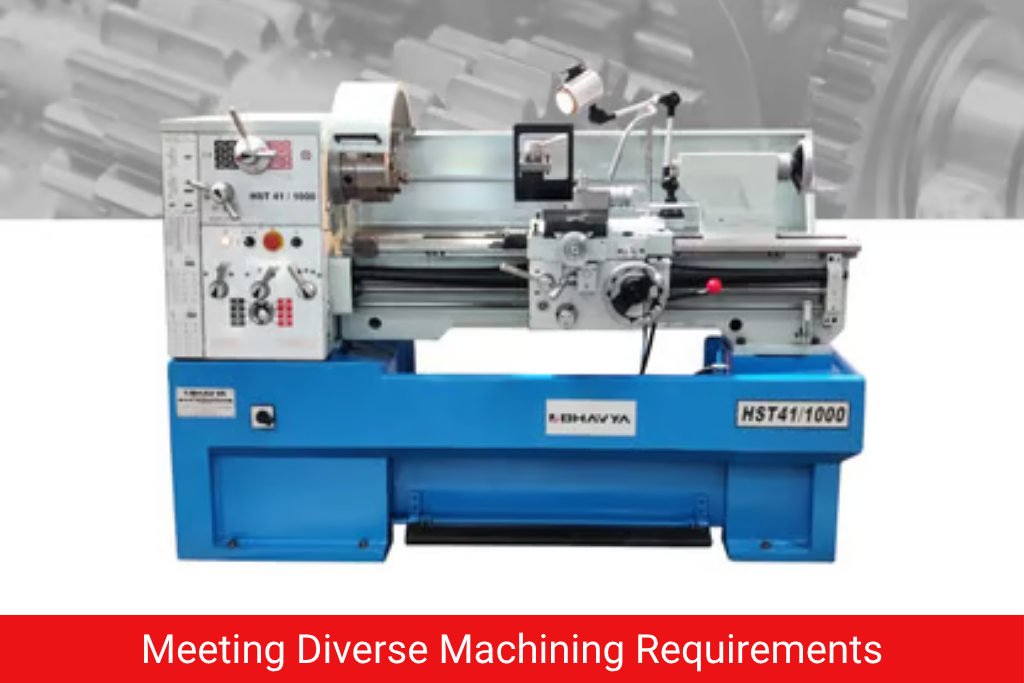
- Some need high-speed repetitive machining
- Others need occasional heavy duty turning
- Machining operations differ too, including facing, threading, taper turning, and boring
- Each operation places different demands on rigidity and control
Because of this variation, manufacturers increasingly consult experienced lathe machine manufacturers before finalizing equipment, rather than relying on generic specification sheets.
How Lathe Machine Manufacturers Design a Customized Lathe Machine
The manufacturer’s customization process is a technical evaluation exercise, distinct from what a buyer decides before purchase.
It typically begins with the manufacturing team studying the customer’s component drawings in detail, checking geometry, tolerances, and finish callouts against what the base machine platform can realistically deliver.
Engineers then translate those specifications into machine-level decisions:
- How the bed and spindle should be sized
- What drive and control system fits the operation
- How the tool post and carriage travel need to be arranged
This is an internal design and engineering exercise carried out by the manufacturer’s technical team, not a checklist the buyer works through.
As a lathe machine manufacturer in India, Bhavya Machine Tools carries out this evaluation internally, converting a buyer’s component drawings and production targets into a practical machine configuration.
Customized Lathe Machine Solutions Based on Component Size and Material
Component diameter and length directly influence bed size, swing, and centre distance. A machine suited for short, slender components will not necessarily handle longer shafts efficiently, and vice versa.
Material hardness also matters. Machining hardened alloy steel requires different spindle power and tooling than machining softer non-ferrous metals.
Based on these factors, manufacturers typically offer:
- Light duty lathe machines for small, precision components
- Medium duty lathe machines for general engineering work
- Heavy duty lathe machines for larger shafts and industrial parts
- Extra heavy duty lathe machines for oversized or high load components
Selecting the right category prevents both underutilization and premature machine wear.
Read Our Article
Hydraulic Press Machine TypesIndustrial Turning Solutions for Continuous Production Output
Industrial turning solutions are built around factory-level output rather than one-off jobs. In continuous production settings, the priority is holding a steady cycle time across thousands of repeat parts.
For these applications, Lathe Machines are typically configured with:
- Optimized tool change sequences
- Stable spindle performance at sustained speeds
- Workholding systems designed for quick, repeatable component loading
The goal is consistent factory output with minimal variation from one shift to the next.
Special Purpose Lathe Machine Customization for Dedicated Component Families
A special purpose lathe machine serves a different need. It is built around one specific component family or operation, such as valve body machining or a particular shaft profile, rather than general repeat production.
This typically involves:
- Custom fixtures designed for the exact component geometry
- Dedicated tooling arrangements suited to that single operation
- Machine layouts tailored to OEM production needs
Such machines are used where one part, or a closely related family of parts, is manufactured over the machine’s operating life.
Our Other Product
Bandsaw MachinesHeavy Duty Lathe Customization for Large Components
Machining large, heavy, or high-load components places extra demands on machine rigidity. Bed construction needs to resist deflection under heavy cutting forces, and load handling capability must match the component weight without compromising accuracy.
Spindle requirements also increase for heavy components, often requiring higher torque output. Stability during machining becomes critical, since vibration at this scale directly affects surface finish.
Heavy-duty lathe customization is typically required for large shaft machining, heavy fabrication work, and industrial equipment manufacturing where component size exceeds standard machine capacity.
Lathe Machine Automation and Customization Features
Automation level is usually decided by production volume and repeatability needs. Customization options include:
- CNC controls for programmable, repeatable machining
- Automatic tooling systems that reduce manual intervention
- Digital measurement systems for in-process accuracy checks
- Hydraulic systems for faster clamping and tool movement
- Special attachments and material handling solutions for high volume settings
Lower volume or highly variable production often works better with simpler, manually operated configurations.
Tooling and Work Holding Customization in Lathe Machines
Tooling and work holding choices directly affect machining suitability.
- Chuck selection depends on component shape and clamping needs
- Fixtures are often custom built for irregular or repeat components
- Cutting tool selection depends on material hardness and required surface finish
- Component positioning and repeatability requirements guide tooling decisions
High volume production benefits from quick change fixtures, while precision work may prioritize tighter positioning tolerances over speed. Getting this customization right reduces setup time and improves consistency across batches.
Key Questions to Discuss With a Lathe Machine Manufacturer Before Customization
Before approaching a manufacturer, buyers benefit from having clear answers to a few core questions:
- What component will be machined, and what does the drawing specify?
- What is the required production volume, now and over the next few years?
- What tolerance and surface finish level is needed?
- Is a manual, semi-automatic, or CNC configuration required?
- Are there future expansion or product diversification plans the machine should accommodate?
Having these answers ready shortens the evaluation cycle and helps the manufacturer propose a configuration that fits current and future production needs.
Selecting the Right Lathe Machine Configuration for Manufacturing Needs
Once the buyer’s requirements are known, selecting the final configuration becomes a matter of matching machine capability to those answers.
A manual lathe machine may suit low volume or highly varied work, while CNC configurations suit high volume, repeatable production.
Tolerance requirements narrow the choice further, since tighter tolerances generally call for more rigid construction and finer control systems. Buyers should weigh these factors against budget and expected machine life, rather than choosing the most capable machine available regardless of actual need.
 Email Us Now!
Benefits of Choosing a Customized Lathe Machine
A properly customized machine offers practical, measurable advantages:
- Better production suitability, since the machine is built around actual components rather than average assumptions
- Improved machining workflow, since tooling and workholding are matched to real production sequences
- Reduced operational limitations, with machine capability aligned more closely to manufacturing requirements
- Improved production consistency across batches over time
Bhavya Machine Tools for Customized Lathe Machine Requirements
Bhavya Machine Tools manufactures a range of industrial machine tools, including Lathe Machines, CNC Lathe Machines, and Heavy Duty Lathe Machines, for engineering and manufacturing applications.
Their product range spans configurations suited to different component sizes, production volumes, and accuracy needs.
With experience across multiple industrial applications, the company works with buyers to understand specific component and production requirements before recommending a suitable machine build. By evaluating machining requirements before machine selection, Bhavya Machine Tools helps industries identify suitable configurations for different production environments, including automotive, engineering, OEM, and heavy fabrication applications.
This positions Bhavya Machine Tools as a lathe machine manufacturer in India that supports customized machining requirements across a wide range of industries.
About Bhavya Machine Tools
Bhavya Machine Tools is a manufacturer, exporter, and supplier of industrial machine tools based in Ahmedabad, Gujarat, India.
Its range includes Lathe Machines, CNC Lathe Machines, and Heavy Duty Lathe Machines, developed for engineering, OEM, and general manufacturing applications. The company focuses on understanding component and production requirements before recommending suitable machine configurations.
Conclusion: Planning Long-Term Production With a Customized Lathe Machine
Choosing a customized lathe machine is ultimately an investment decision, not just a specification exercise.
Beyond matching a machine to today’s components, buyers benefit from working with an experienced lathe machine manufacturer capable of supporting long-term production planning as volumes, tolerances, or product lines evolve, so the machine selection process does not need revisiting each time production requirements shift.
FAQs About Customized Lathe Machines
What is a customized lathe machine?
It is a Lathe Machine configured around a buyer's specific component size, material, production volume, and machining requirements, rather than a standard generic specification.
Why do manufacturers require customized Lathe Machines?
Because component geometry, material hardness, and accuracy expectations vary widely across industries, a standard machine often cannot meet every production requirement efficiently.
How do lathe machine manufacturers customize machines for different industries?
They evaluate component drawings, material type, production volume, and required operations, then configure bed size, spindle capacity, tooling, and automation level accordingly.
When should a company choose a special purpose lathe machine?
When production centers around one specific component or operation performed repeatedly, a special purpose lathe machine is often more efficient than a general purpose one.
How does heavy duty lathe customization support large component machining?
It strengthens bed rigidity, load handling, and spindle torque to safely and accurately machine large or heavy components without excess vibration.
What information should buyers provide before ordering a customized lathe machine?
Component drawings, material specifications, production volume, required operations, tolerance requirements, and automation expectations.
Which industries require industrial turning solutions?
Automotive component manufacturing, engineering industries, OEM production, heavy fabrication, shaft machining, and valve manufacturing commonly require them.
How can buyers select the right lathe machine manufacturer in India?
By evaluating a manufacturer's experience with similar components, their customization process, and their ability to support buyers through requirement evaluation and after-sales service.
What are the benefits of buying a customized lathe machine?
Buyers get a machine matched to their actual components and volumes, which typically means fewer operational limitations, more consistent machining, and better long-term production suitability.