



AI Summary: This article explains ten types of components manufactured using slotting machines across different industries, including keyways, gear blanks, dies, splined shafts, internal slots, jigs, fixtures, cutting tools, mould cavities and irregular profile parts. It highlights how slotting machine technology supports precision internal machining that other machine tools cannot easily replicate.
A slotting machine is a specialised machine tool that uses a reciprocating vertical ram to cut internal and external slots, keyways and irregular profiles that are often difficult to produce on lathes or milling machines alone. Bhavya Machine Tools manufactures a range of slotting machines widely used across tool rooms and manufacturing facilities that need precise internal machining capability for components with limited access. You can explore the slotting machines offered by Bhavya Machine Tools to understand the range of capacities available for different industrial applications. Despite the growing use of CNC machining centers, slotting machines remain relevant because they can reach internal features and confined geometries that rotating cutting tools cannot always access efficiently. This article covers ten categories of components across various industries that continue to rely on slotting machine technology for accurate, cost effective internal and profile machining operations.
Keyways in Shafts, Pulleys and Gears
Keyways are precision slots cut into shafts, pulleys and gears to accommodate a key that transmits rotational torque between two connected components without slipping. A slotting machine cuts these internal keyways with straight, parallel walls that ensure the key fits snugly and distributes load evenly across its length. Many power transmission components require internal keyways that cannot be accessed easily by a milling cutter due to limited clearance, making the slotting machine’s straight line cutting action particularly useful. Industries manufacturing pumps, motors and gearboxes rely on slotting machines to produce accurate keyways that prevent premature wear or failure at the shaft to hub connection point.
Internal Splines for Gear and Shaft Assemblies
Internal splines cut inside a bore allow a shaft to transmit torque to a mating component while still permitting axial sliding movement in certain mechanical assemblies. Slotting machines are used to cut these internal spline grooves with consistent depth and spacing, which is essential for even load distribution across all spline teeth during operation. Automotive transmission components and heavy machinery drive assemblies often require internal splines that would be extremely difficult to produce using standard milling or turning methods due to limited internal access. The reciprocating cutting action of a slotting machine allows these internal features to be machined accurately without needing specialised gear cutting equipment for every job.
Read Our Article
All About Light Duty & Heavy Duty Slotting MachineDie Cavities for Press Tools and Stamping Operations
Die sets used in press tools and stamping operations often require precise internal cavities and slots that match the profile of the punch used to cut or form sheet metal parts. Slotting machines are used in tool room environments to machine these internal die profiles accurately, ensuring the punch and die clearance remains consistent around the entire cutting edge. Since die accuracy directly affects the quality of stamped parts produced later in production, tool makers rely on slotting machines to achieve the tight tolerances needed for clean, burr free stamping results. This makes slotting machine technology valuable for tool and die manufacturing industries supporting automotive, electrical and general sheet metal fabrication sectors.
Splined and Slotted Shafts for Machine Tool Drives
Splined and slotted shafts used within machine tool drive systems require accurate external slots or splines that engage with mating gears or coupling components to transmit power reliably. Slotting machines cut these external features with straight, uniform depth along the shaft length, ensuring consistent engagement across the full length of the mating connection. Machine tool manufacturers producing feed drive shafts and gearbox components often use slotting machines for this purpose, particularly when the shaft geometry does not lend itself easily to milling due to length or access constraints. This capability supports the broader machine tool manufacturing industry in producing reliable, long lasting drive train components.
Our Other Product
Shaping MachinesJigs and Fixtures for Production Line Tooling
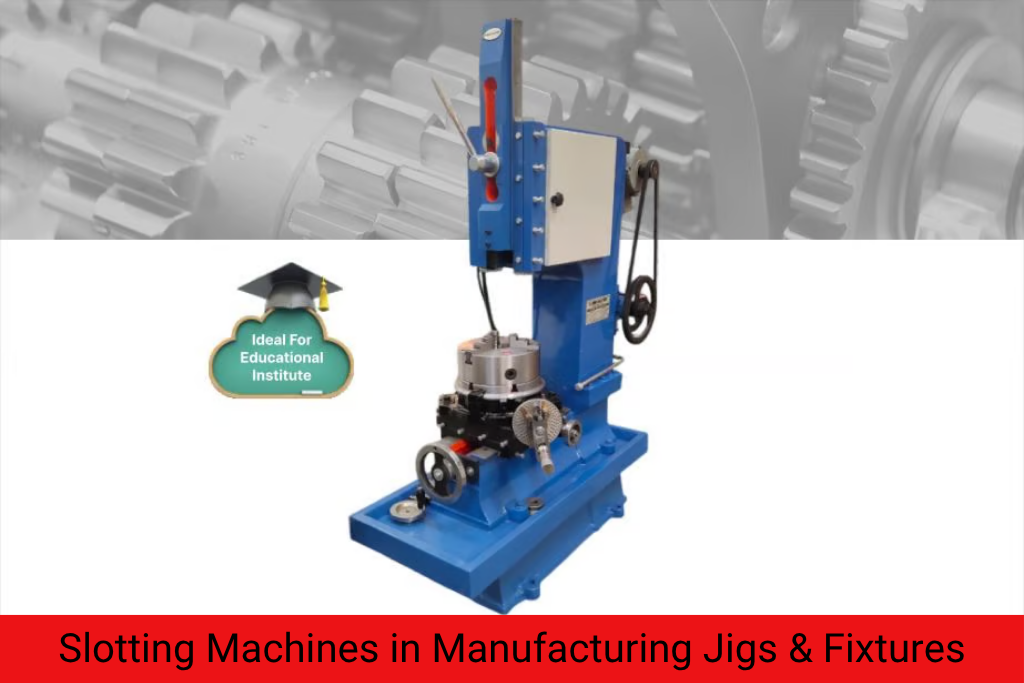
Jigs and fixtures used to hold and guide workpieces during production often require precisely slotted locating features, guide channels and clamping slots to ensure repeatable positioning across every part processed through the tooling. Slotting machines allow tool room technicians to cut these internal and external slots with high accuracy, which is critical since even small deviations in fixture geometry can lead to positioning errors across an entire production batch. Many custom fixtures for automotive and general engineering assembly lines are produced using slotting machines because of the flexibility this equipment offers for one off or low volume tooling projects. This makes slotting machines a valuable asset in tool rooms supporting diverse manufacturing operations.
Cutting Tool Bodies and Tool Holder Slots
Cutting tool manufacturers use slotting machines to produce slots and internal features on tool holder bodies, indexable tool blocks and specialised cutting tool assemblies that require precise clearance for insert seating or clamping mechanisms. The straight line cutting capability of a slotting machine ensures that these slots maintain consistent width and depth, which is important for secure insert retention during high speed cutting operations. Tool room facilities producing custom or specialised cutting tools for niche applications often rely on slotting machines when standard milling operations cannot achieve the required internal geometry. This supports the broader cutting tool manufacturing industry in producing reliable, precisely fitted tool holding components.
What Our Customers Say
“Hi kishan this side from ganesh industries, i have purchased a drill bit grinder machine months before, after using this machine i have achieved proper size of drill holes as well as low wear and tear of drill, ratio of drill break is significantly decreased and production increased due to less resharpening cycles, the machine i purchase is 13A and i am impressed with the speed and low maintenance of the machine, Thank you hasthbhai for serving us very well at company.”
Kishan Bhut On Google
Mould Cavity Features for Plastic and Rubber Moulding
Mould manufacturers occasionally use slotting machines to produce specific internal cavity features, ejector pin slots and guide channels within mould blocks used for plastic and rubber moulding processes. While much of modern mould making relies on CNC machining, slotting machines remain useful for certain internal slot features that benefit from the straight reciprocating cutting action this machine tool provides. Accurate slotting within mould tooling helps ensure that ejector systems function smoothly and that moulded parts release cleanly from the cavity during production. This niche application demonstrates how slotting machines continue to support specialised tool making requirements even within increasingly automated manufacturing environments.
Irregular Profile Components for General Engineering
General engineering workshops frequently use slotting machines to produce irregular internal and external profiles on custom components that do not fit standard machining categories, such as specialised brackets, adapters and mechanical linkages. The versatility of a slotting machine allows operators to cut straight, angled and stepped profiles by adjusting the table position and ram angle, making it suitable for producing one off or low volume custom parts. This flexibility is particularly valuable for repair and maintenance workshops that need to reproduce obsolete or damaged components without access to the original manufacturing tooling. Slotting machines therefore remain an important piece of equipment for general engineering and machinery repair industries.
Textile Machinery Components with Internal Slots
Textile machinery often includes components with internal slots and keyways used for adjusting mechanisms, tensioning devices and drive linkages that require precise, repeatable slot dimensions for smooth operation. Slotting machines are used by textile equipment manufacturers to produce these internal features accurately, ensuring that adjustment mechanisms move smoothly without excessive play or binding. Since textile machinery often operates continuously for long production runs, dimensional accuracy in these slotted components directly affects the reliability and maintenance requirements of the equipment. This makes slotting machines a valuable tool for manufacturers supplying components to the textile and allied machinery industries.
Agricultural Equipment Parts with Slotted Adjustments
Agricultural machinery frequently includes components with slotted holes and adjustment channels that allow farmers and operators to fine tune equipment settings such as blade height, spacing or tension for different field conditions. Slotting machines are used to produce these adjustment slots with consistent width and length, ensuring smooth sliding movement of the adjustable component without excessive looseness or binding. Since agricultural equipment must withstand rough field conditions, the durability of accurately machined slots helps maintain reliable adjustment functionality over the equipment’s working life. This application shows how slotting machines continue to support practical, field ready component manufacturing within the agricultural equipment industry.
Conclusion
Slotting machines continue to play an important role across diverse manufacturing industries because of their unique ability to produce internal and confined geometry features that other machine tools cannot always replicate efficiently. From keyways and internal splines to die cavities and agricultural adjustment slots, this machine tool supports precision component manufacturing across automotive, textile, tool making and general engineering sectors. Bhavya Machine Tools manufactures a reliable range of slotting machines designed to help workshops and production facilities achieve the accurate internal machining their components demand.
Frequently Asked Questions
Top 10 Components Make with Slotting Machines
What is a slotting machine used for in manufacturing?
A slotting machine uses a reciprocating vertical ram to cut internal and external slots, keyways and
irregular profiles that are difficult to produce using lathes or milling machines.
Which industries commonly use slotting machines?
Automotive, machine tool, textile, agricultural equipment, tool and die making, and general
engineering industries commonly use slotting machines for precision slot and keyway production.
Can slotting machines produce internal splines?
Yes, slotting machines are commonly used to cut internal splines inside bores for shaft and gear
assemblies that require accurate torque transmission features.
Why are slotting machines still used when CNC machining is available?
Slotting machines remain useful for certain internal and confined geometry features that are difficult
or costly to access using standard milling or CNC machining tools.
Where can I view the slotting machines available from Bhavya Machine Tools?
The complete range of slotting machines manufactured by Bhavya Machine Tools can be explored on the Slotting Machines category page of their official website.