



AI Summary: This article shares ten practical buying tips for manufacturers evaluating a panel bender for sheet metal fabrication, covering bending capacity, blade length, automation level, tooling flexibility, back gauge accuracy, software support, floor space, after sales service, energy efficiency and total cost of ownership. It also highlights the CNC panel bender pressure arm type offered by Bhavya Machine Tools within their bending press brake machine range.
A panel bender is increasingly becoming the preferred solution for manufacturers who need to produce complex, multi bend sheet metal enclosures quickly and accurately without the extensive manual repositioning required on a conventional press brake. Bhavya Machine Tools offers a CNC panel bender in the pressure arm type configuration within their bending press brake machine range, giving anufacturers give panel bending machine options suited to enclosure, cabinet and box type fabrication work. Unlike traditional bending machines that require the operator to flip and reposition the sheet for each fold, a panel bender uses a moving blade and pressure beam to fold multiple sides of a part in sequence while the sheet remains largely stationary. This automation significantly reduces cycle time and improves consistency, but selecting the right panel bender requires careful evaluation of several technical and commercial factors. This article outlines ten important buying tips that manufacturers should consider before investing in a panel bender for their sheet metal production line.
Evaluate the Maximum Bending Length and Sheet Size Capacity
Before selecting a panel bender, manufacturers should carefully assess the maximum sheet length and width their typical production parts require, since exceeding the machine’s rated capacity will limit the range of components that can be produced. A panel bending machine with insufficient bending length forces fabricators to either reject certain job orders or find workarounds that reduce the efficiency benefits automation was meant to provide. It is also important to consider future product lines rather than only current requirements, since panel benders represent a significant capital investment expected to serve production needs for many years. Reviewing typical enclosure and cabinet dimensions across your product catalogue helps determine the right bending length specification for a new panel bender purchase.
Check the Maximum Material Thickness and Bending Force
Different panel bender models are rated for different maximum material thicknesses, and manufacturers must ensure the machine they select can handle the gauge of sheet metal used across their product range without exceeding the rated bending force. Attempting to bend material thicker than the machine’s rated capacity can result in poor bend quality, excessive tool wear or even damage to the panel bending machine itself. Buyers should confirm the bending force specification against their heaviest gauge material requirement rather than only their average or most common material thickness. A CNC panel bender with adequate force capacity for the full range of materials used in production ensures consistent bend quality across every job the machine processes.
Assess the Level of Automation and Programming Flexibility
Panel benders vary considerably in their level of automation, from semi automatic models requiring manual sheet positioning between folds to fully automatic systems capable of completing an entire multi sided enclosure with minimal operator intervention. Manufacturers should evaluate their typical batch sizes and product variety to determine whether a fully automatic panel bender’s higher cost is justified by their production volume, or whether a semi automatic pressure arm type panel bender offers a more balanced investment. Programming flexibility is equally important, since manufacturers producing varied enclosure designs need software that allows quick creation and storage of new bend programs without extensive manual reconfiguration. Reviewing the ease of programming during a demonstration helps buyers understand how quickly their team can adapt to a new panel bender’s control system.
Review Tooling Flexibility for Different Product Designs
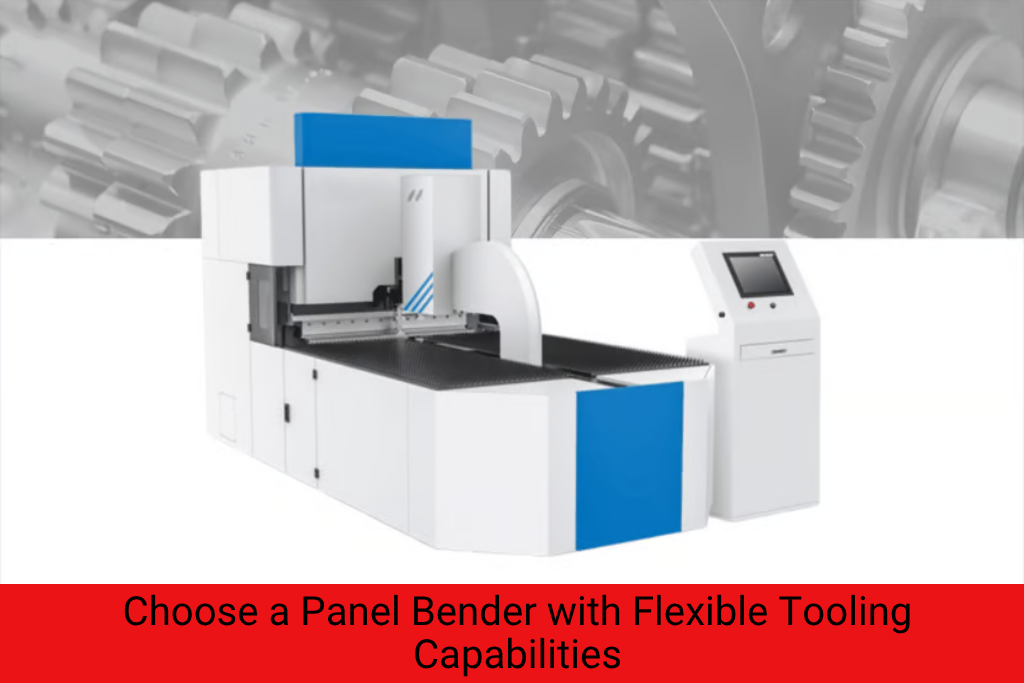
The tooling used on a panel bender directly affects what shapes and flange configurations the machine can produce, so manufacturers should confirm that available tooling options match their current and anticipated product designs. Some panel bending machines offer modular tooling systems that allow quick changes between different blade and beam configurations, which is valuable for manufacturers producing a diverse range of enclosure sizes and flange types. Buyers should also ask about the cost and lead time for additional tooling, since ongoing tooling investment can add significantly to the total cost of operating a panel bender over its working life. Confirming tooling compatibility with your specific product range before purchase helps avoid costly surprises after the machine has been installed.
Verify Back Gauge and Positioning Accuracy Specifications
Since a panel bender relies on accurate sheet positioning to achieve consistent flange dimensions across multiple bends on the same part, manufacturers should carefully review the back gauge and positioning accuracy specifications of any machine under consideration. Higher positioning accuracy directly translates into tighter tolerance control on finished enclosures, which becomes especially important for products requiring precise door or panel fitment. Buyers should request accuracy figures under realistic operating conditions rather than only ideal laboratory specifications, since real world factory conditions can sometimes affect achievable precision. A CNC panel bender with reliable, repeatable positioning accuracy reduces the need for manual correction or rework after the automated bending cycle is complete.
Consider Available Floor Space and Material Handling Requirements
Panel benders, particularly fully automatic models with integrated loading and unloading systems, often require more floor space than a conventional press brake, so manufacturers must plan their factory layout carefully before finalising a purchase. Buyers should also consider how sheets will be loaded onto the machine and how finished parts will be handled afterward, since inadequate material handling infrastructure can bottleneck the productivity gains a panel bender is meant to deliver. Reviewing the machine’s footprint alongside existing workflow patterns helps identify whether additional handling equipment, such as sheet lifters or conveyors, will be needed alongside the panel bending machine. Proper planning at this stage prevents costly layout changes or workflow disruptions after installation.
Our Other Product
Universal Cutter GrindersWhat Our Customers Say
“Nice machineries We worked on Lathe and End milling machine good Experience Better features”
RAJESH A On Google
Evaluate Software Support and Integration with Design Files
Modern panel benders rely heavily on software to translate part designs into bend sequences, so manufacturers should confirm that the machine’s control software can import files directly from their existing CAD or nesting software without requiring extensive manual reprogramming. Seamless software integration reduces the time between receiving a new part design and having it ready for production on the panel bender, which is particularly valuable for manufacturers handling frequent custom orders. Buyers should also ask about software update policies and whether the manufacturer provides ongoing support for control system upgrades. A panel bender with strong software integration capability ultimately shortens the path from design to finished product across a manufacturer’s entire order pipeline.
Compare Energy Efficiency and Operating Cost Over Time
While the upfront purchase price of a panel bender is an important consideration, manufacturers should also evaluate ongoing operating costs, including electricity consumption, hydraulic fluid requirements and maintenance frequency, since these factors accumulate significantly over the machine’s working life. Some panel bending machine models use servo electric drive systems that consume less energy than traditional hydraulic systems, which can offer meaningful savings for manufacturers running the machine across multiple shifts. Comparing energy consumption figures between different panel bender models, alongside expected maintenance intervals, helps buyers understand the true long term cost of ownership rather than focusing solely on the initial purchase price. This comprehensive cost comparison often reveals that a slightly higher priced, more efficient panel bender delivers better value over its operating lifetime.
Investigate After Sales Service and Spare Parts Availability
Since a panel bender is a complex machine combining mechanical, hydraulic and electronic systems, manufacturers should thoroughly investigate the after sales service network and spare parts availability
offered by the supplier before finalising their purchase decision. Extended machine downtime due to unavailable spare parts or delayed service response can significantly disrupt production schedules, particularly for manufacturers who depend on the panel bender as a critical part of their fabrication process. Buyers should ask about typical response times for service calls, availability of local technicians and stock levels for commonly needed spare parts. Choosing a panel bender manufacturer with a strong service reputation and accessible support network reduces long term operational risk associated with unexpected breakdowns.
Request References and Demonstrations from Similar Industries
Before finalising a panel bender purchase, manufacturers should request references from other buyers operating in similar industries or producing comparable enclosure and cabinet type products, since real world feedback often reveals practical considerations that specifications alone cannot capture. Arranging a live demonstration using sample parts similar to your actual production requirements allows buyers to directly evaluate cycle time, bend quality and ease of operation before committing to a purchase. Speaking with existing users about their experience with machine reliability, service support and software usability provides valuable insight beyond what a sales presentation typically covers. This due diligence step helps manufacturers make a more confident, informed decision when investing in a panel bender for their production facility.
Conclusion
Investing in a panel bender is a significant decision that affects production speed, part quality and long term operating costs, making thorough evaluation across capacity, automation, tooling, software and service support essential before purchase. Manufacturers who carefully assess these ten factors position themselves to select a panel bending machine that truly matches their product range and production goals. Bhavya Machine Tools offers a CNC panel bender in the pressure arm type configuration within their bending press brake machine range, providing manufacturers with a reliable option for efficient, accurate sheet metal panel bending.
Frequently Asked Questions
Panel Bender Buying Tips for Manufacturers
What is the main advantage of a panel bender over a conventional press brake?
A panel bender can fold multiple sides of a sheet metal part in sequence without repeated manual
repositioning, reducing cycle time and improving consistency for complex enclosure parts.
How do I choose the right bending capacity for a panel bender?
Review the maximum sheet length, width and material thickness required across your current and
anticipated product range, then select a panel bender rated comfortably above your heaviest
requirement.
Is a fully automatic panel bender always the better choice?
Not necessarily, a semi automatic pressure arm type panel bender can be more cost effective for
manufacturers with moderate batch sizes, while fully automatic systems suit very high volume
production.
Why is software integration important when buying a panel bender?
Strong software integration allows part designs to move quickly from CAD files to bend programs,
reducing setup time and supporting manufacturers who handle frequent custom orders.
Where can I explore the CNC panel bender offered by Bhavya Machine Tools?
The CNC panel bender pressure arm type can be explored within the Bending Press Brake Machines category on the Bhavya Machine Tools website.