Shaping Machines: Diagnosing Poor Surface Finish Through Tool, Setup and Workpiece Checks

AI Summary: Poor surface finish on shaping machines can result from tool wear, workpiece movement, unwanted contact during the return stroke or unsuitable cutting conditions. Start by recording the finish pattern and any vibration or noise. Then inspect the tool, workpiece support and machine setup. Test suitable adjustments one at a time and compare the result with the job requirement.

Understanding Shaping Machine Surface Finish Problems

Poor shaping machine surface finish can appear as rough areas, repeated marks or an uneven pattern across a component. Shaper machine chatter may also be accompanied by unusual vibration or noise, although visible marks alone do not confirm the cause.

A structured approach to shaping machine troubleshooting begins with recording the symptom, followed by checks of the single point cutting tool, workpiece support and cutting conditions. Bhavya Machine Tools offers shaping machines for metalworking applications, and the checks discussed here can help workshop teams investigate a finish problem on the machine and job in use.

Identify the Shaping Machine Surface Finish Pattern

Before changing anything on the machine, examine the affected workpiece and record what is actually visible. The pattern of marks can help the operator decide which check to carry out next, though it does not confirm the cause on its own.

  • Marks across most of the surface: note whether they stay consistent throughout the cut and whether vibration or noise is also present.
  • Roughness limited to one area: record its position and check whether that area has adequate workpiece support.
  • Marks associated with the return stroke: look for signs of unwanted contact during the return movement, following the machine’s safe inspection procedure.

Record these observations in writing before adjusting the setup, so a later change can be judged against a clear starting point.

Inspect the Single Point Cutting Tool for Wear and Mounting

The single point cutting tool is one of the first items worth reviewing once the finish pattern has been recorded. Look for visible wear, chipping or damage along the cutting edge, and check whether the edge still appears sharp and intact.

Review how the tool is mounted, including the length of overhang from the tool post. Excessive overhang can allow the tool to deflect during the cut, so this is worth checking alongside the tool condition itself.

Confirm that the tool selected is appropriate for the workpiece material and the operation being performed.

Check Workpiece Clamping and Support on a Shaping Machine

The way a workpiece is held can influence the finish just as much as the tool. Review whether the workholding arrangement supports the component securely throughout the cutting stroke.

Check that the workpiece is properly seated against the table or fixture, with no gap or rocking that could allow movement during the cut. Look at the support available under the area actually being machined, since unsupported sections are more likely to flex.

If any looseness or shift is visible after a test cut, review this area again before moving to other checks.

Check Tool Clearance and Return Movement on a Shaping Machine

A shaping machine works through a reciprocating motion, so the return stroke deserves the same attention as the cutting stroke. Check whether the tool has adequate clearance for the setup in use, since insufficient clearance can lead to unwanted contact on the return.

After stopping and isolating the machine in accordance with workshop procedures, inspect the tool and workpiece for signs of rubbing or contact. Have authorised personnel assess the tool head and its return movement using the applicable machine instructions.

Tool lifting and feed arrangements can differ between models, and automatic tool head feed is not standard on every shaping machine. Refer to the instructions for the actual machine when assessing these differences.

Review Cutting Conditions and Shaper Machine Chatter

Review the cutting speed, feed and depth of cut selected for the job. Consider whether these settings suit the workpiece material and the operation being carried out.

Shaper machine chatter may involve cutting conditions, tool condition or workpiece support. Record when vibration occurs and review the current settings alongside the other observations before deciding whether an adjustment is appropriate.

Verify Results During Shaping Machine Troubleshooting

Once a possible cause has been identified, any change should be tested in a controlled way before it is treated as the fix. Start by recording the original condition and the suspected issue in detail.

Where practical, change one relevant factor at a time. This makes it easier to assess how each adjustment affects the result. Observe the result on a suitable test piece or an approved workpiece, then compare the new finish against the job requirement.

Record the result clearly before making any further change. If the finish remains outside the job requirement, continue the investigation.

When to Escalate a Shaping Machine Finish Problem

Some finish problems go beyond what can be resolved through routine setup checks. A supervisor, maintenance technician or the machine supplier should be involved if a fault is suspected beyond normal adjustment, or if chatter or poor finish continues after the checks above.

When escalating, provide the machine model, workpiece material, location of the marks, current cutting settings and the results of any approved checks already carried out. Photographs of the affected surface may also help the team discuss the issue.

Follow workplace procedures and machine instructions before carrying out further checks. Refer suspected internal faults to authorised maintenance personnel.

Shaping Machines from Bhavya Machine Tools

Bhavya Machine Tools lists standard, deluxe and hydraulic shaping machine models. Its standard and deluxe models are described with naturally seasoned, heavily ribbed casting and quick return motion.

The hydraulic model is listed with a power pack that includes an electric motor, hydraulic vane pump and control valves. Buyers should confirm the specifications of the model they require.

The machines use a single point cutting tool in a reciprocating motion to generate straight and flat surfaces, and Bhavya Machine Tools ships its range to customers across India and to several countries internationally.

Conclusion: Shaping Machine Surface Finish Troubleshooting

An ordered investigation gives a workshop a clearer path to resolving a poor surface finish than making changes at random. Begin with observation, then work through the tool, workpiece support and cutting conditions, testing one change at a time on an approved piece.

To discuss shaping machine specifications or requirements for a workshop, reach out to Bhavya Machine Tools, or explore its range of shaping machines and the Deluxe Shaping Machine.
Frequently Asked Questions About Shaping Machine Surface Finish

Centerless or Cylindrical Grinding Machine: From Turning to Grinding

AI Summary: Preparing a turned component for grinding means reviewing its production route, the stock left after turning, its condition after machining or heat treatment, its locating surfaces, and its inspection records. What a part needs before it reaches a centerless grinding machine or a cylindrical grinding machine depends on the component drawing and the grinding process selected for it.

Introduction to Grinding Machine Preparation

A turned shaft may need further checks before it is ready for grinding. The material left after turning, the condition of the component and the chosen setup all influence the next stage of the process.

In precision shaft manufacturing, pre grinding preparation starts with the component drawing and production route. Engineers can then review the grinding stock allowance and decide what must be checked before the part reaches a centerless grinding machine or a cylindrical grinding machine from a supplier such as Bhavya Machine Tools.

Manufacturing Route From Turning to Cylindrical or Centerless Grinding Machine

Before grinding begins, it helps to look back at the component drawing and the finished dimensions it calls for. The route from raw material to finished part usually passes through turning, and sometimes other machining stages, before grinding.

Some routes include heat treatment between turning and grinding, while others do not. The position of grinding in this sequence affects how much stock should remain and what condition the part should be in when it arrives.

A component may be routed to a centerless grinding machine, a cylindrical grinding machine, or neither, depending on its geometry and tolerance requirements. Not every turned part needs both operations, and the choice should follow the drawing and process plan rather than assumption.

Need More Information?
Email Us Today!

Grinding Stock Allowance as Pre Grinding Preparation

Grinding stock allowance is the material left on a surface for removal during grinding. For a shaft diameter, it is the difference between the dimension before grinding and the specified finished diameter.

A workshop should state whether an allowance is expressed on the diameter or per side. It should also check the remaining material after any intermediate operation, including heat treatment, before releasing the part for grinding.

A single diameter reading does not confirm adequate stock around the entire surface. Runout, taper or distortion can leave less material in some areas, so the part should be checked against the process plan before grinding.

Incoming Condition Checks for Cylindrical and Centerless Grinding Machine Jobs

When a component moves from turning to grinding, the grinding team benefits from checking its physical state on arrival. Straightness or runout should be checked using the method specified in the process plan. A visual inspection can reveal obvious damage, but it may not identify smaller deviations that affect the setup or the available grinding stock. Surface condition should be reviewed separately. Scratches, handling marks, burrs, or other visible damage picked up after turning should be noted before the part proceeds further. These checks compare the part as received with the condition specified in the process plan. Grinding cannot be assumed to correct every condition a component arrives with.

Lathe Machine Accessories: Chucks, Faceplates, Steady Rests and Follower Rests

Heat Treatment and Pre Grinding Preparation

Not every component passes through heat treatment on its way to grinding. Where a process plan includes it, the part should be reviewed again once heat treatment is complete.

Heat treatment can change a component’s dimensions or surface condition compared with how it left the turning operation. This makes it worth confirming the part still matches what the grinding stage expects.

If the earlier stock allowance no longer looks appropriate after heat treatment, this is worth raising between the heat treatment, turning and grinding teams before the part is released to grinding.

Locating Surfaces for a Cylindrical Grinding Machine or Centerless Grinding Machine

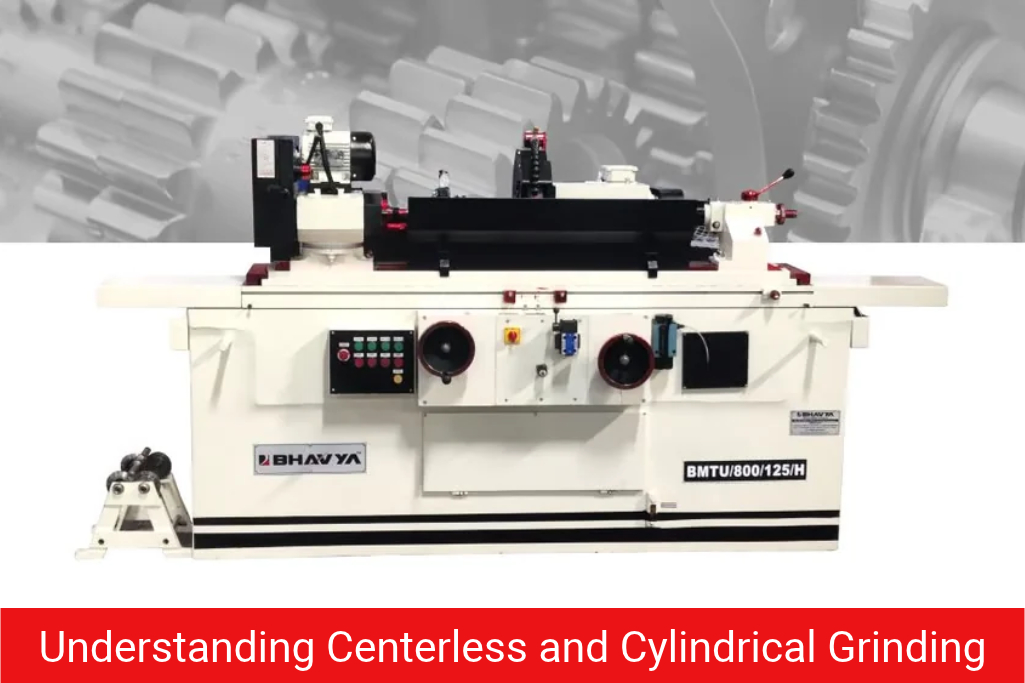
For cylindrical grinding between centres, such as on a Bhavya Machine Tools BMTU Series machine, the component’s centre holes and the machine centres used to support it are worth inspecting. Their condition matters because they establish how the part is positioned for the operation. Not every cylindrical job is set up this way, so this check applies where the selected process calls for it.

In centerless grinding, such as on the company’s SL Series, the workpiece is supported by a work rest blade and controlled by a regulating wheel while the grinding wheel removes material. The surfaces used for support and contact should be reviewed for the selected setup.

Whichever method applies, the intended locating or support arrangement should be confirmed against both the component and the machine setup planned for the job. These are general process explanations, and the actual requirements should follow the workshop’s own process plan.

Final Readiness Review for Precision Shaft Manufacturing

Before releasing the component to grinding, record its identification against the drawing or job order, inspection results, remaining stock and condition after any specified heat treatment. Include unresolved issues and any instructions the grinding operator needs.

Shaping Machines

Discuss Cylindrical Grinding Machine and Centerless Grinding Machine Needs with Bhavya Machine Tools

When approaching a grinding machine supplier, buyers can make the conversation more useful by sharing some details in advance. Component dimensions and geometry are a starting point.

Material and condition before grinding, along with required finished dimensions and tolerances, help narrow down suitable options. Planned production quantity and the intended grinding process also matter.

Workshop space available for the machine is another factor worth mentioning early. Bhavya Machine Tools can be contacted to confirm machine suitability, specifications, and the configurations available for a given job.

Call Now for Instant Assistance!
Call Now

About Bhavya Machine Tools

Bhavya Machine Tools is based in Ahmedabad, India, and offers workshop and metal fabrication machinery. Its grinding machine range includes surface, cylindrical and centerless grinders.

The company’s SL Series centerless grinding machines include models with different listed grinding diameter ranges, and its BMTU Series cylindrical grinding machines are built for grinding between centres. Buyers can discuss their component dimensions, production requirements and intended process with Bhavya Machine Tools when reviewing a suitable machine.

Conclusion: Preparing a Component for Centerless or Cylindrical Grinding

Reviewing the production route, the stock left after turning, the component’s condition, and its locating requirements can help a workshop prepare a part properly before it reaches grinding. These checks depend on the component drawing and the grinding process selected for each job. For questions on matching a component to the right cylindrical or centerless grinding machine, Bhavya Machine Tools can be reached to discuss specific requirements.

Frequently Asked Questions on Cylindrical and Centerless Grinding Machine Preparation

Frequently Asked Questions on Cylindrical and Centerless Grinding Machine Preparation

What is grinding stock allowance?

Grinding stock allowance is the material left on a surface for removal during grinding. For a shaft, it is the difference between the dimension before grinding and the specified finished diameter.

How should stock allowance be stated on a shaft drawing or process sheet?

A drawing or process sheet should state whether the allowance is expressed on the diameter or per side, so the grinding stage starts from the same understanding as turning and any intermediate process.

What should happen if a shaft has insufficient stock before grinding?

If a shaft arrives with less material than the process plan expects, it should be reviewed and the route corrected before it is loaded onto a centerless or cylindrical grinding machine.

Why do locating requirements differ between cylindrical and centerless grinding?

Cylindrical grinding between centres, as on a Bhavya Machine Tools BMTU Series machine, relies on the component being referenced at its centre holes, while centerless grinding, as on the company's SL Series, supports the workpiece between wheels and a work rest blade instead.

Can a workshop assess a grinding machine using only shaft diameter?

Shaft diameter alone is not enough to assess the full application. Buyers should also share component length, geometry, material, required tolerances, production quantity and available workshop space with the supplier, such as Bhavya Machine Tools, when reviewing a suitable machine.

<< 1 >>


4 in 1 Fiber Laser Welding Machine: Evaluating Shared Equipment for High Mix Fabrication Shops

AI Summary: A workshop considering a four in one fiber laser welding machine should study its own order mix before assuming a fit. Reviewing demand across welding, cutting, cleaning and seam cleaning, along with changeover time and operator availability, shows whether shared equipment suits the schedule. Bhavya Machine Tools offers this configuration and can confirm the accessories included in a given setup. A multipurpose laser machine can serve different jobs, but each operation needs time on the same equipment. This buying guide helps high mix workshops assess fabrication job scheduling, including competing deadlines, operator availability and the time needed for each laser welding changeover.

Four in One Fiber Laser Welding Machine: Mapping Weekly Demand

Start by recording actual work over a representative period, such as two to four weeks. Note how many jobs need welding, cutting, cleaning or seam cleaning, and roughly how long each task takes.

Also record due dates and order priorities for that period. A job with a tight deadline behaves differently on a shared schedule than one with flexibility.

Compare a typical week against a busier one. Demand that looks manageable most weeks can look very different during a peak period.

Fabrication Job Scheduling: Grouping Similar Tasks

Once demand is mapped, review whether similar operations from different orders can be scheduled together. Grouping similar tasks may reduce the number of switches the machine goes through in a day.

This has to be balanced against delivery dates. A job due before its matching group forms should not wait simply to preserve a clean sequence.

Decide in advance which jobs always take priority over a planned grouping, such as urgent repairs or contractual deadlines. This keeps grouping a scheduling tool rather than a fixed rule.

Call Now for Instant Assistance!
Call Now

Laser Welding Changeover: What to Record

Changeover time is the gap between finishing one function and starting the next, such as moving from welding to cutting or from cutting to cleaning. Record the two functions involved, along with preparation, adjustments and checks before the next task begins.

Record delays caused by missing materials or accessories separately. This helps the workshop distinguish the changeover procedure from other scheduling delays.

A workshop evaluating a machine it does not yet own cannot measure these figures directly on its own floor. Existing process records and a discussion with Bhavya Machine Tools, including a demonstration if one is offered, become the practical way to estimate changeover times before purchase.

Confirm the exact changeover procedure and the accessories it requires directly with Bhavya Machine Tools.

Multipurpose Laser Machine: Allocating Operators Across Functions

A shared machine schedule depends on who is available to run it. List which operators can handle welding, cutting, cleaning and seam cleaning, and note any training or authorisation appropriate to that operation. Shift patterns matter too. An operator scheduled for one task in the morning may have other responsibilities later, which affects when remaining work can run. Plan for the operator who is unavailable on a given day, so the schedule does not depend on one person. Review the work area, controlled access, suitable extraction and operator training requirements with Bhavya Machine Tools and a qualified safety professional, rather than assuming a particular protective feature is included.

Grinding Machine for Automotive Components: Applications and Benefits

Fiber Laser Welding Machine: Identifying Queues Between Functions

Jobs waiting for the machine are one of the clearest signs of pressure in a shared schedule. Track how long work sits idle while another function is in use.

Urgent orders that interrupt planned work add directly to this queue, often extending the wait for jobs that were otherwise on schedule.

As an illustrative example, a workshop with eight available machine hours in a shift can map each job against its required time and deadline. Adding expected preparation and changeovers shows whether the proposed sequence fits the shift or creates a conflict.

Record queue length and waiting time from the workshop’s own data to build this picture over a few weeks.

When a Multipurpose Laser Machine Needs Separate Equipment

If two functions are frequently needed at the same time, compare their expected schedules to see whether one machine could accommodate both. Repeated conflicts may indicate a need to consider additional or dedicated equipment.

The same applies when one operation occupies the machine for extended periods and pushes other work back repeatedly, or when urgent jobs keep disrupting the planned sequence.

This is a decision based on observed or estimated demand and on machine capability confirmed with Bhavya Machine Tools, not a fixed rule tied to a particular production volume.

CNC Lathe Machines

Four in One Fiber Laser Welding Machine: Questions to Discuss with Bhavya Machine Tools

A short list of questions can guide that conversation once a workshop has reviewed its own schedule.

  1. Which functions and accessories are included in this configuration?
  2. Are the intended materials and tasks suitable for the selected machine and configuration?
  3. What steps are required to change between operations?
  4. What information is available about operating, training and protective requirements?
  5. Can the proposed jobs be reviewed or discussed before a purchase decision?

Confirm the functions, accessories, demonstrations and training services included with the specific configuration offered.

Need More Information?
Email Us Today!

About Bhavya Machine Tools and Its Laser Machine Range

Bhavya Machine Tools is based in Ahmedabad, Gujarat, India. The company offers workshop and metal fabrication machinery, including lathe machines, drilling machines, press brakes, shearing machines and laser machines.

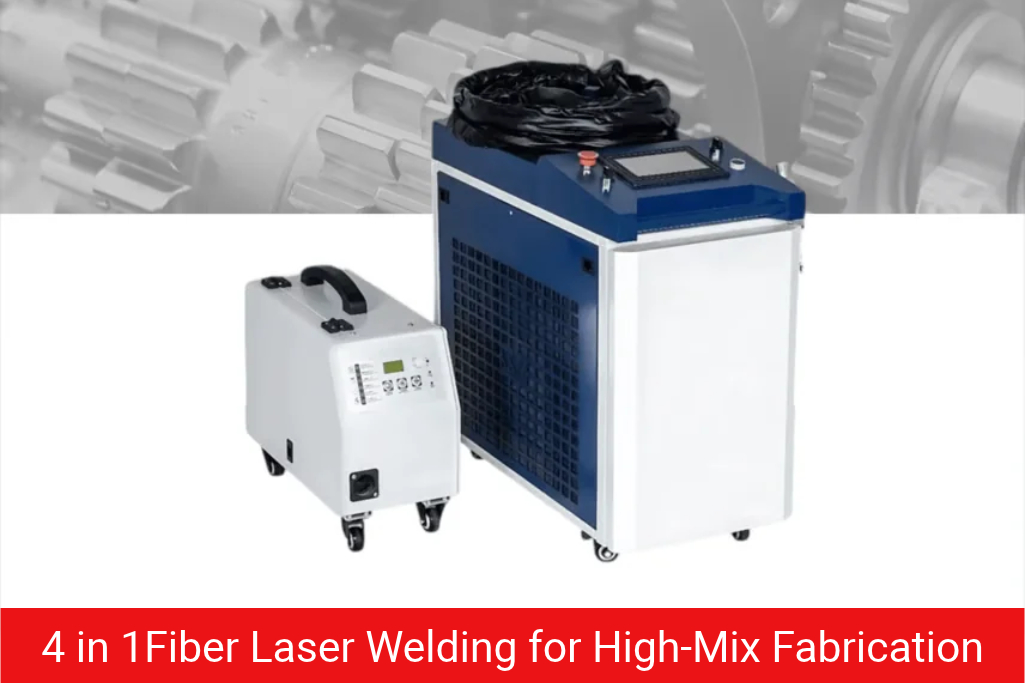
Its laser machine range includes the Open Type Double Drive Fiber Laser Cutting Machine, Tube Fiber Laser Cutting Machine, Board One Fiber Laser Cutting Machine and Exchange Work Table Fiber Laser Cutting Machine, along with the Fiber Laser Marking Machine and Portable Fiber Laser Marking Machine. The range also includes the 4 in 1 Fiber Laser Welding Machine covered in this guide, whose product page identifies welding, cutting, cleaning and seam cleaning as its functions.

For fabrication shops considering shared equipment, Bhavya Machine Tools can discuss the intended materials, task mix and selected configuration. Buyers can also ask about the accessories and changeover requirements relevant to their planned work.

Multipurpose Laser Machine: Conclusion

Whether this machine suits a workshop depends on its order mix, available operators and the time needed to move between tasks. Review these factors against the confirmed capabilities of the selected configuration. Share the intended jobs and production requirements with Bhavya Machine Tools before making a decision.

4 in 1 Fiber Laser Welding Machine: Frequently Asked Questions

4 in 1 Fiber Laser Welding Machine: Frequently Asked Questions

What should a workshop review before choosing a multipurpose laser machine?

A workshop should review its demand across welding, cutting, cleaning and seam cleaning, how tasks can be grouped, changeover time and operator availability, then confirm the configuration with Bhavya Machine Tools before deciding.

How can fabrication job scheduling affect the use of shared equipment?

When several functions share one machine, scheduling determines when each task can run. Conflicting priorities or insufficient time between jobs can create queues.

Why should a workshop record laser welding changeover time?

Changeover time varies by workshop and operator experience, so recording it directly, and confirming the procedure with Bhavya Machine Tools, gives a realistic basis for scheduling rather than an assumed figure.

When might separate equipment be worth considering?

Separate equipment is worth considering when two functions are frequently needed at the same time, or when one operation regularly occupies the machine for long periods. Bhavya Machine Tools can help assess this against a specific job mix.

What information should buyers share with Bhavya Machine Tools about their order mix?

Buyers should share their materials, expected task mix, typical job volumes and deadlines that are difficult to adjust. These details can help the company assess suitability against the selected configuration.

<< 1 >>


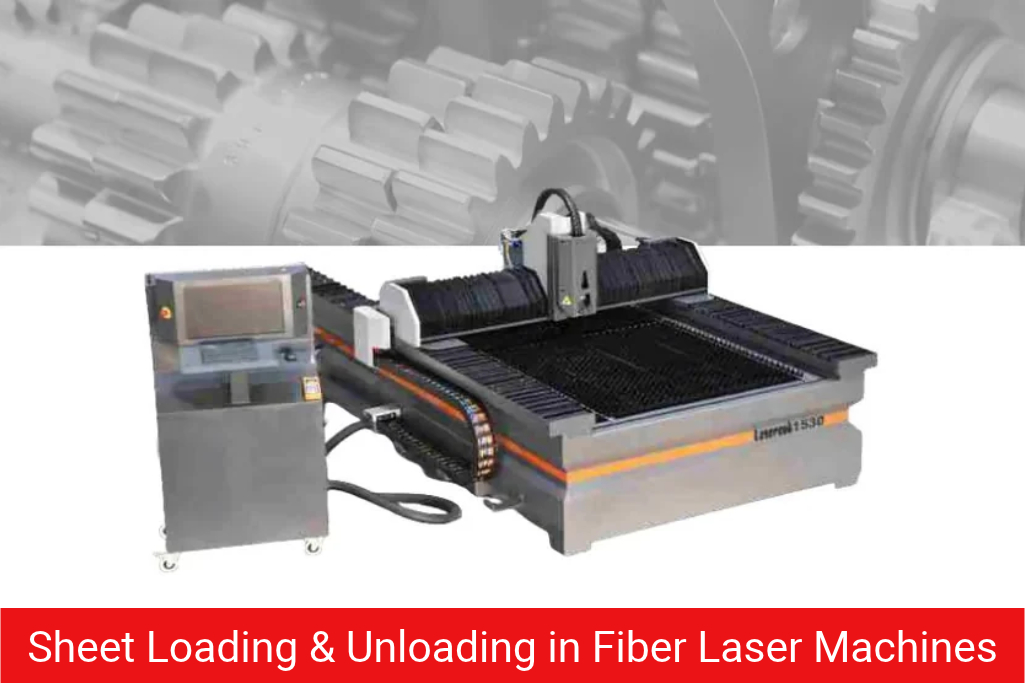
Open Type Double Drive Fiber Laser Cutting Machine: Planning Sheet Loading, Access and Part Removal

AI Summary: Sheet handling around the Open Type Double Drive Fiber Laser Cutting Machine from Bhavya Machine Tools covers more than the cutting process itself. Incoming sheet movement, loading access, positioning, finished part removal and skeleton collection each need their own space in a laser cutting workstation layout. Protective and extraction arrangements should be reviewed with the supplier and a qualified safety professional before installation

Introduction

A well planned workstation considers how material reaches the cutting bed and where finished parts go afterward. For plant planners, these movements are as relevant to daily operations as the machine’s processing range.

When planning an Open Type Double Drive Fiber Laser Cutting Machine, review sheet access, available lifting equipment and the space needed for sorting and scrap collection. This helps connect laser sheet handling with the wider production flow.

A practical layout considers each handling stage, from the arrival of raw sheets to the removal of cut parts and remaining material.

Laser Sheet Handling Starts with Mapping Incoming Sheet Movement

Before a sheet reaches the cutting bed, it travels from storage to the workstation. Start by identifying the storage location, the orientation sheets need to be in for loading, and the turning points along the route.

Note any aisle crossings shared with deliveries, forklift traffic or staff movement. A route that works for small test runs can still create delays once full production volumes move through the same space.

Sheet dimensions affect the clearance needed along the route, while thickness contributes to sheet weight and the choice of handling equipment.

We are Fast in Response
Contact Now!

Loading Equipment and Access on an Open Type Fiber Laser Cutting Machine

Review the lifting capacity, reach and clearance of the cranes, hoists or other handling methods proposed for the largest sheet the workshop plans to process. Consider both the sheet weight and the handling equipment used to support it.

Check the space needed for equipment to approach and manoeuvre near the bed. Discuss the suitable loading side and access requirements for the selected model and planned sheet sizes with Bhavya Machine Tools.

Sheet Positioning and Support on the Fiber Laser Cutting Machine

Once loaded, a sheet needs to be properly seated and positioned before the cutting program begins. Operators should follow the supplied operating instructions to check this before each job starts, rather than assuming consistent placement. Processing sizes differ across the models in this range, so exact bed dimensions and positioning tolerances should be confirmed directly with Bhavya Machine Tools for the model under consideration. Document the agreed positioning procedure so operators can follow the same checks between shifts. The procedure should identify the reference position, any required sheet inspection and the steps to take if the sheet is not seated correctly.

Hydraulic Press Machine Types

Finished Part Removal in the Laser Cutting Workstation Layout

Part size and quantity shape how removal should be organised. A batch of small components needs sorting containers and identification, while a handful of large panels needs space to lift and set down safely.

Plan a nearby area for temporary placement before parts move to welding, finishing, assembly or dispatch. Keeping this step visible in the layout, rather than an afterthought, helps it connect smoothly to the next operation.

Skeleton Collection After Fiber Laser Cutting

The remaining sheet material after cutting, often called the skeleton, needs its own handling plan separate from finished parts. Its shape and sharp edges make it awkward to move without a defined process.

Plan where skeleton material will be placed after cutting and how it will be moved to the collection area. Confirm with Bhavya Machine Tools what removal arrangements, if any, apply to the selected configuration.

The collection method and how often it is cleared should match the workshop’s existing scrap process, so it does not interfere with incoming sheets or finished part removal.

Bandsaw Machines

Protective Arrangements for the Laser Cutting Machine Workstation

An open layout should never be read as allowing operators or other staff to approach the cutting area while the laser is active. Controlled access during operation needs to be built into the workstation plan from the start.

Discuss a laser hazard assessment, fume extraction suited to the materials being cut, and the protective measures required for the installation with Bhavya Machine Tools and a qualified safety professional.

These requirements depend on the specific installation and the local rules that apply to it, so they should be confirmed for the actual site rather than assumed from general practice.

Email Our Team to Discuss Your Requirements
Email!

Bhavya Machine Tools: Fiber Laser Cutting Machine Manufacturer

Bhavya Machine Tools LLP is headquartered in Ahmedabad, Gujarat, India, with an international branch in Dubai, UAE. The company manufactures and supplies a wide range of workshop and sheet metal fabrication machinery, including bending, cutting, press and laser machines. Its Laser Machines range includes fiber laser cutting and marking equipment, with this machine positioned for sheet metal fabrication work.

Conclusion: Plan Your Laser Cutting Workstation Layout

A planned sequence for incoming sheets, loading, positioning, part removal and skeleton collection helps workshops consider the space and procedures needed around the machine. Reviewing these stages together can make the proposed layout easier to assess before installation.

Workshops are encouraged to discuss their sheet sizes, layout and application details directly with Bhavya Machine Tools when planning an installation.

Frequently Asked Questions About Open Type Fiber Laser Cutting Machine Sheet Handling

Frequently Asked Questions About Open Type Fiber Laser Cutting Machine Sheet Handling

What information should a workshop collect before planning its laser cutting workstation layout?

Gather the range of sheet sizes and thicknesses to be cut, the lifting and handling equipment already available, the floor space around the planned location, and the production stages that follow cutting. Sharing these details with Bhavya Machine Tools helps confirm the right configuration for the workshop.

How can sheet handling affect the time between cutting jobs?

Slow loading, positioning checks, or delays clearing finished parts and skeleton material add idle time at the machine, even when the cutting cycle itself runs quickly.

What should be checked when selecting lifting equipment for large sheets?

Confirm the rated lifting capacity for the planned load, including the sheet and any lifting attachments. Review the reach needed for the proposed loading method and the clearance available to manoeuvre near the machine.

How can a workstation accommodate different sizes of cut parts?

Review the expected mix of components when planning the removal area. Allow space for suitable containers, handling equipment and temporary storage without blocking the route used for incoming material.

What protective and extraction arrangements should be reviewed before installation?

A laser hazard assessment, controlled access during operation, and fume extraction suited to the materials being cut should be confirmed with Bhavya Machine Tools and a qualified safety professional.

<< 1 >>