



AI Summary: Buyers evaluating a CNC Panel Bender Machine are choosing between two very different manufacturing philosophies – Indian production, which competes on cost and delivery speed and European engineering from Italy, Germany and Switzerland, which leads on precision heritage and software depth. This article compares both regions on price, technology, build quality and after-sales support, helping fabricators decide which Panel Bender Manufacturer best fits their production goals.
How Do CNC Panel Bender Manufacturers in India Compare With European Machine Builders?
Sheet metal fabricators across HVAC, electrical enclosure and appliance manufacturing increasingly rely on a CNC Panel Bending Machine to fold sharp, mark-free bends without repositioning the sheet manually. For decades, this category was dominated almost entirely by European names. That has changed. Indian manufacturers have moved from assembling basic hydraulic press brakes to building genuine Panel Benders with servo-electric drives, PLC-based controls and tooling that rivals machines built in Europe a decade ago.
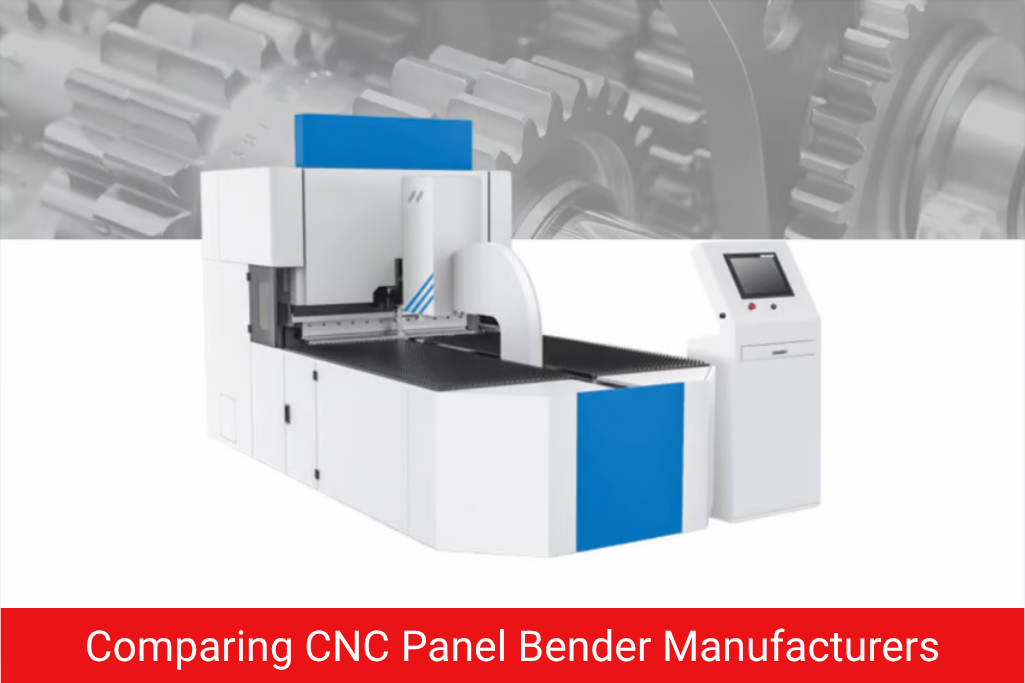
The comparison isn’t simply “cheaper vs. better.” It’s a question of what a fabricator actually needs: how many bends per shift, what tolerances the end product demands and how quickly a breakdown can be resolved. Indian machines answer the first two reasonably well today. European machines still set the benchmark for ultra-tight tolerances and continuous, unattended production runs.
What Makes CNC Panel Bending Machine Technology Different in Italy?
Italy is where the modern panel bender was effectively invented and Italian builders still hold a technology lead in blade geometry and multi-axis bending heads. Italian machines are engineered for complex geometries – boxes, trays and enclosures with multiple flanges bent in a single cycle without manual re-clamping. Their software libraries are mature, often supporting direct import from CAD files with automatic bend-sequence calculation.
This depth comes at a price. A mid-size Italian Automatic Panel Bender can cost two to three times more than a comparable Indian machine and spare parts typically ship from Europe, which adds lead time for Indian buyers.
How Do Panel Benders in German Approach Precision Engineering?
German manufacturers approach panel bending the way they approach most machine tools – with an emphasis on structural rigidity, thermal stability and long-term repeatability. A German-built machine is engineered to hold its calibration across years of three-shift operation, which matters most to buyers running high-volume, tight-tolerance parts such as automotive brackets or precision electrical panels.
German builders also tend to integrate robotic loading and unloading more seamlessly, since much of their client base runs lights-out manufacturing. This level of automation is available from Indian manufacturers too, but it is usually added as a bolt-on rather than a factory-integrated system.
Why Are Automatic Panel Bender Machines in Switzerland Known for Reliability?
Switzerland’s machine tool reputation rests on component-level precision – bearings, ball screws and servo feedback systems manufactured to extremely tight specifications. Swiss-built panel benders are less common in volume manufacturing and more often found in niche, high-value applications: medical enclosures, instrumentation housings and aerospace brackets where a fraction of a millimeter matters.
Because Swiss production volumes are lower and labor costs are the highest of the three European markets discussed here, machines from Switzerland typically command the steepest price premium of any Panel Bender Manufacturer in this comparison and lead times can run several months longer than Italian or German alternatives.
Read Our Article
NC Press Brake vs CNC Press Brake: Top 10 DifferencesWhat Drives the Cost Difference Between Indian and European Panel Bender Manufacturers?
Four factors explain most of the price gap:
- Labor cost: Manufacturing labor in India remains a fraction of European rates, which flows directly into machine pricing.
- Component sourcing: European brands often use in-house or regional suppliers for servo drives and CNC controllers, adding cost; Indian builders frequently combine imported control systems with locally fabricated structural components.
- R&D amortization: Italian and German firms spread decades of software and mechanical R&D investment across their pricing; younger Indian manufacturers are still building out that library.
- Logistics and duties: Importing a European Flexible Panel Bender into India involves shipping, customs duty and installation travel costs that a domestically produced machine avoids entirely.
Together, these factors typically place Indian machines 30–50% below European equivalents on landed cost, with the gap widening further once ongoing spares and service travel are factored in.
How India’s Automatic CNC Metal Sheet Panel Benders Are Raising Global Quality Standards?
Quality has improved substantially over the past five to seven years. Leading Indian builders now use branded servo motors, imported ball screws and CNC controls sourced from established automation suppliers, rather than relying solely on locally made components. Sheet-thickness handling, repeatability and bend-angle accuracy on well-built Indian machines are now suitable for most general fabrication, enclosure manufacturing and mid-volume production work.
Where the gap still exists is in extreme-precision applications and in software sophistication for highly complex, multi-bend parts. For a fabricator producing straightforward enclosures, panels or brackets, Indian-built machines often deliver comparable functional output at a materially lower cost. For aerospace-grade tolerances or fully automated production cells, European machines still hold an edge.
Our Other Product
Universal Cutter GrindersHow to Choose a Panel Bender Manufacturer for Your Sheet Metal Facility?
- Define your tolerance requirement first. If your parts require sub-0.1mm consistency across millions of cycles, weight European options more heavily.
- Calculate total cost of ownership, not just machine price. Include spares availability, technician travel time and expected downtime when comparing an Indian CNC Panel Bender Machine against a European import.
- Check local service infrastructure. A manufacturer with regional service engineers reduces downtime risk far more than a lower purchase price does.
- Ask for a live trial on your actual material. Bend quality varies with sheet thickness and alloy; a demonstration on your own stock is more useful than a spec sheet comparison.
- Review software compatibility. Confirm the CNC Panel Bending Machine you’re evaluating can import your existing CAD/CAM files without manual re-programming.
- Verify warranty and spares lead time in writing. This single factor often determines real operating cost more than the headline price.
 Email!
Why Choose Bhavya Machine Tools that Support Panel Bender Buyers across India?
Bhavya Machine Tools LLP, headquartered in Ahmedabad, Gujarat, has built a reputation across machining, metal fabrication and re-sharpening equipment, supplying manufacturers such as Tata Steel, Siemens, L&T and Adani. Its metal fabrication range spans bending and press brake machines, shearing equipment, laser cutting and marking systems and other sheet metal machinery designed for automotive, construction and general engineering industries. With operations extending to the UAE and USA for local support and service, Bhavya combines engineering expertise with a service network built to keep fabrication lines running with minimal downtime.
Conclusion
Choosing between an Indian-built machine and one imported from Italy, Germany or Switzerland isn’t about picking but it’s about matching machine capability to production reality. Indian manufacturers have closed much of the technology gap on general-purpose fabrication work while holding a clear cost and service-speed advantage. European builders retain their lead in extreme precision, advanced automation integration and mature bending software for the most complex parts. Fabricators serving standard-to-mid-volume production, where cost and turnaround matter as much as ultimate precision, will often find that Indian Panel Benders meet the requirement without the import premium.
FAQs
CNC Panel Bender Manufacturers in India vs. European Manufacturers: A Quality and Cost Comparison
Are Indian CNC Panel Bender Machines suitable for export-quality fabrication?
Yes, for most general fabrication and enclosure work. Extremely tight-tolerance, high-precision parts may still favor European builds.
Which country offers the fastest delivery for a Panel Bender Manufacturer?
Indian manufacturers generally offer shorter lead times for domestic and Asian buyers, since machines don't require international shipping or customs clearance.
Do European Automatic Panel Bender machines require specialized maintenance?
They benefit from trained technicians familiar with their specific control systems; spares sourced from Europe can extend repair timelines outside the region.
Is a Flexible Panel Bender always more expensive than a standard press brake?
Typically yes, given the added automation and tooling flexibility, but the reduction in manual handling often offsets the higher upfront cost over time.
Can Indian manufacturers integrate robotic loading with their machines?
Many now offer this as an added system, though it's less commonly factory-integrated compared to German-built lines designed from the outset for automation.