



In the rapidly evolving landscape of 2026 manufacturing, selecting the right milling machine is the cornerstone of any successful machine shop. Whether you are a procurement officer in Germany, a workshop owner in India, or a factory manager in the United States, understanding the nuances of different milling architectures is vital for ensuring high ROI and operational precision.
This comprehensive guide addresses the most frequent questions global buyers ask when navigating the diverse world of milling machinery.
Vertical Turret Milling Machines (The Versatility King)
Why is the Vertical Turret Milling Machine considered the “standard” for small-to-medium shops?
The Vertical Turret Milling Machine, often called a “Bridgeport-style” machine, is prized for its versatility. The spindle remains vertical, but the turret can rotate 360∘ around the column, and the head can tilt. This allows for complex angular cuts without repositioning the workpiece.
What is the typical application for a Turret Mill?
It is the go-to for Rapid Prototyping and Maintenance Departments. Global buyers choose this for its ease of use and the ability to perform drilling, boring, and milling operations in a single setup.
 Email Us Today!
All-Geared Vertical Milling Machines (The Powerhouse)
What is the primary difference between a Turret Mill and an All-Geared Vertical Mill?
While both are vertical, the All-Geared Vertical Milling Machine uses a gearbox to drive the spindle rather than belts. This provides significantly higher torque at lower speeds, making it superior for heavy-duty metal removal in tough alloys.
Does the geared head affect maintenance?
Yes. Geared heads are more robust but require regular oil changes within the gearbox. However, for global buyers looking for 24/7 reliability in heavy production, the gear-driven system eliminates the “belt slip” common in lighter machines.
Light Duty Universal Milling Machines (The Economical Entry)
What makes a milling machine “Universal”?
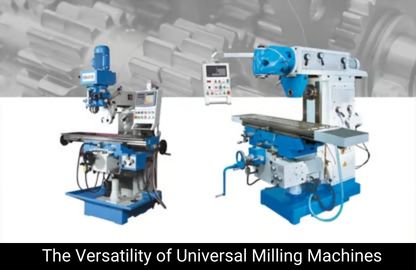
A machine is “Universal” when it features a table that can swivel horizontally. This allows the machine to perform helical milling (like cutting gears) when synchronized with a dividing head.
Is a Light Duty machine sufficient for industrial use?
For educational institutes, research labs, or light component manufacturing (like small gaskets or aluminum parts), a Light Duty Universal Milling Machine is highly cost-effective. It offers the same geometry as its heavy-duty cousins but with a smaller footprint and lower power consumption.
Read Our Article
Various Milling Machines and their ApplicationsAll-Geared Universal Milling Machine (ADM) (The Precision Workhorse)
What does the “ADM” designation typically imply for global buyers?
ADM (often referring to Advanced Design or Specific Model series) machines are engineered for high precision and automatic feeds on all three axes (X,Y,and Z). The all-geared mechanism ensures that power delivery is constant even during deep cuts.
Can this machine handle both horizontal and vertical milling?
Most All-Geared Universal machines come with a vertical attachment. This “Two-in-One” capability is a favorite for global buyers who have limited floor space but need to perform both face milling (vertical) and slab milling (horizontal).
Extra Heavy Duty All-Geared Milling Machines (The Industrial Beast)
When should a buyer step up to an Extra Heavy Duty model?
If your facility processes large castings, engine blocks, or structural steel for Ship Building or Earth Moving Machinery, this is the machine you need. Extra Heavy Duty All-Geared Milling Machines feature wider box-ways and reinforced columns to dampen vibrations during high-torque operations.
How does the weight of the machine affect accuracy?
In milling, “Mass is the friend of Precision.” A heavier machine base absorbs the harmonic vibrations generated by the cutting tool. For global buyers, an Extra Heavy Duty machine ensures that the surface finish remains consistent even when removing large volumes of material.
Our Other Machine
Slotting MachinesHeavy Duty Bed Type Universal Milling Machine (The High-Capacity Solution)
How does a “Bed Type” differ from a “Knee Type” machine?
In a Knee Type, the table moves up and down. In a Heavy Duty Bed Type Universal Milling Machine, the table sits directly on a fixed bed that only moves longitudinally and crosswise, while the spindle head moves vertically. This design allows the machine to support significantly heavier workpieces (up to several tons) without the risk of “table sag.”
Why is this preferred for the Aerospace and Automotive sectors?
Because of its rigidity. When milling large molds or aerospace structural ribs, the Bed Type construction provides the thermal and mechanical stability required for long-cycle machining jobs.
Universal Knee Type Milling (The Classic Production Tool)
What is the “Knee,” and why is it important?
The knee is the heavy casting that supports the table and moves vertically along the column. The Universal Knee Type Milling design is incredibly ergonomic for operators who need to make frequent adjustments to the height of the workpiece.
Is this machine suitable for mass production?
Yes, especially when fitted with power feeds and Digital Readouts (DRO). It is the backbone of Job & Machine Shops worldwide, offering a perfect balance between workpiece capacity and machine footprint.
What Our Customers Say
“Largest Display of Machinery across India. Wide range of Machines. Very Co-operative staff. Range of Tapping Machine and Re-sharpening Machines are outstanding. Very Cost effective and useful in Precision Machining Work. Their staff is co – operative for after sales support.”
Tirth Bhojani On Google
Our Other Machine
Drilling & Milling MachineUniversal Swivel Head Milling Machine (The Angle Specialist)
What is the unique advantage of a Swivel Head?
Unlike a standard vertical mill, the Universal Swivel Head Milling Machine can be rotated in two planes (often referred to as a “Bi-rotary” or “Huron-type” head). This allows the operator to mill complex angles, undercuts, and compound curves without ever moving the workpiece.
Who is the ideal buyer for this technology?
Tool and Die makers, as well as manufacturers of Architectural Profiles and Furniture molds. The ability to reach difficult angles makes it indispensable for complex 3D geometries.
Global Procurement: Common Buyer Concerns
What electrical standards should I specify?
Global buyers must ensure the motors are wound for their local grid—typically 380V-415V/50Hz for Europe and Asia, or 220V-480V/60Hz for the Americas. Always ask if the machine includes an EMI filter if you plan to integrate CNC or sensitive electronics.
How are these machines shipped internationally?
Industrial mills are heavy and top-heavy. They are typically shipped in “Sea-Worthy” wooden crates with vacuum-sealed plastic and anti-rust coatings to prevent corrosion during ocean transit. Ensure your supplier provides a detailed packing list and lifting instructions.
What about after-sales support for global exports?
Reliable manufacturers provide a “Spares Kit” (fuses, belts, specialized wrenches) with the machine. For complex parts like gears, look for suppliers who offer digital manuals and video-call technical support to minimize downtime.
Read Our Article
Vertical vs. Horizontal Milling Machines: Key DifferencesSummary Table: Which Milling Machine Do You Need?
| Machine Type | Best For… | Key Strength |
| Vertical Turret | Toolrooms / Prototyping | Versatility & Tilting Head |
| All-Geared Vertical | Heavy Production | High Torque / Low Speed Power |
| Light Duty Universal | Education / Light Fab | Cost-Effective / Small Footprint |
| ADM Universal | Precision Engineering | Automated Feeds / Rigidity |
| Extra Heavy Duty | Mining / Earth Moving | Maximum Metal Removal |
| Bed Type Universal | Large Mold Making | High Weight Capacity |
| Knee Type Universal | General Job Shops | Balance of Speed & Capacity |
| Swivel Head Mill | Die Making / Complex Angles | Multi-Angle Spindle Movement |
The 2026 AI Edge in Milling
While these machines are manual or semi-automatic by nature, the “AI Edge” is making its way into the sector through Smart DROs (Digital Readouts). Modern DROs can now predict tool wear and suggest optimal feed rates based on the material being cut—whether it’s Stainless Steel for Pharma Machinery or Aluminum for Aerospace components.
Pro Tip: When choosing between a Universal and a Vertical machine, consider your 5-year plan. A Universal machine might be a slightly higher investment today, but its ability to perform horizontal milling can save you from buying a second machine later.


