



Precision in Motion: The Power of Hydraulic Pipe Bending
The objective of this article is to explore the sophisticated world of industrial pipe manipulation, focusing on how hydraulic systems provide the necessary force to shape heavy-duty materials. We will examine the transition from mechanical methods to fluid power, the importance of preparatory cutting and the various applications of high-pressure machinery in modern manufacturing.
Hydraulic Pipe Bending Machine Operations and the Principles of Fluid Power
At the heart of modern industrial infrastructure lies the ability to manipulate rigid materials into complex configurations. The hydraulic pipe bending machine represents the pinnacle of this capability. Unlike manual methods that rely on physical leverage, these systems utilize the principles of Pascal’s law to exert immense pressure through incompressible fluids. This process allows for the shaping of large-diameter, thick-walled pipes that would be impossible to bend using human strength or simple mechanical gears. The beauty of fluid power is its ability to provide consistent, smooth force, which is essential for maintaining the structural integrity of the pipe. When a pipe is bent, the outer wall stretches while the inner wall compresses; hydraulic systems allow for the fine-tuned control necessary to ensure that these stresses do not lead to thinning, wrinkling or catastrophic failure of the material.
Pipe Bending Machine Evolution from Manual to Automated Systems
The history of metalworking has seen a steady progression toward greater automation and power. Early iterations of the pipe bending machine were often hand-operated, suitable only for thin conduits or soft metals like copper. However, as industries like oil and gas, shipbuilding and aerospace expanded, the demand for heavy-duty piping grew. This necessitated a shift toward more robust solutions. Mechanical systems introduced gears and pulleys to amplify force, but they often struggled with the precision required for tight-radius bends. The introduction of hydraulic actuators changed the landscape entirely. By using high-pressure pumps and cylinders, manufacturers gained the ability to manipulate stainless steel and carbon steel with extreme accuracy. This evolution has led to the highly sophisticated equipment we see today, which can be programmed to repeat complex sequences with minimal variation.
Pipe Cutting Machine Integration in the Fabrication Workflow
Before a pipe can be bent, it must be prepared with absolute precision. This is where the pipe cutting machine becomes an indispensable part of the workshop. A clean, square cut is a prerequisite for any successful bending operation. If the end of a pipe is jagged or uneven, it may not sit correctly in the die of the bending machine, leading to misalignment or slippage during the application of hydraulic pressure. Furthermore, in high-pressure applications, the length of the pipe must be exact to ensure that the final assembly fits perfectly within its intended environment. Integrating high-quality cutting solutions ensures that the material is ready for the intense forces it will encounter later in the fabrication process.
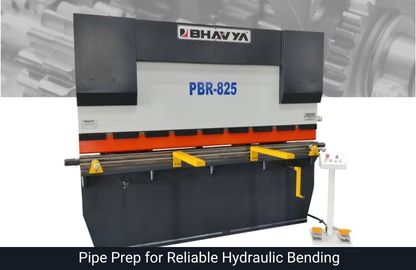
Pipe Cutting Band Saw Machine Utility for Heavy-Duty Materials
In many industrial settings, the pipe cutting bandsaw machine is the preferred tool for initial preparation. These machines use a continuous serrated blade to move through thick metal walls with minimal heat generation. Because hydraulic pipe bending machine often involves pipes that will carry high-pressure fluids or gases, avoiding excessive heat during the cutting phase is crucial to prevent altering the grain structure of the metal. The band saw provides a level of versatility that allows operators to handle various diameters and material grades, ensuring that the pipe enters the bending phase in optimal condition.
Heavy Pipe Bending Machine Capabilities for Large-Scale Infrastructure
When dealing with the massive pipes used in municipal water systems or industrial refineries, a standard unit simply will not suffice. The heavy pipe bending machine is a specialized class of equipment built to handle extreme weights and dimensions. These machines feature reinforced frames and high-capacity hydraulic reservoirs to sustain the pressure required for long-duration bends. The challenge with heavy-duty piping is managing the massive amount of energy stored in the metal as it resists deformation. Fluid power allows for a gradual, controlled application of force, reducing the risk of “spring-back” and ensuring that the final product meets the exact specifications required for safety-critical infrastructure.
Mechanical Pipe Bending Machine Comparisons with Hydraulic Alternatives
It is worth exploring how the mechanical pipe bending machine differs from its hydraulic counterparts. Mechanical systems typically use a motor-driven screw or a series of gears to apply force. While these are efficient for smaller tasks and offer a degree of simplicity, they often lack the “feel” and nuanced control of hydraulics. Hydraulic systems can be equipped with sensitive valves that allow the operator to adjust pressure in real-time based on the material’s reaction. In contrast, mechanical systems are often more rigid. While they remain useful for high-speed, light-duty production, the heavy-duty sector almost exclusively favors hydraulics for its superior torque and smooth delivery.
What Our Customers Say
“Largest Display of Machinery across India. Wide range of Machines. Very Co-operative staff. Range of Tapping Machine and Re-sharpening Machines are outstanding. Very Cost effective and useful in Precision Machining Work. Their staff is co – operative for after sales support.”
Tirth Bhojani On Google
Hydraulic Machine Versatility across Different Manufacturing Sectors
The term hydraulic machine covers a wide array of tools beyond just those used for bending. In a modern fabrication facility, you will find these systems powering everything from shears to assembly presses. The common thread is the use of fluid as a medium for power transmission. This versatility means that the same fundamental technology used to bend a heavy pipe can also be used to punch holes or assemble components. The reliability of hydraulic systems is a major factor in their widespread adoption; with proper maintenance of seals and fluids, these machines can operate for decades under harsh industrial conditions, providing a consistent return on investment for manufacturing firms.
Hydraulic Press Roles in Forming and Shaping Metal Components
Closely related to bending is the work performed by the hydraulic press. While a bender focuses on creating curves, the press is often used for flattening, punching or forming complex shapes in metal plates and pipe ends. In many workflows, a pipe may need to be bent and then have its ends flared or flattened to accommodate connectors. The hydraulic press provides the vertical force necessary for these operations. By utilizing various molds and dies, the press can transform a simple cylindrical pipe into a specialized component ready for immediate installation. This highlights the interconnected nature of fluid-power machinery in the metalworking industry.
Pipe Bending Machines and the Importance of Precision Tooling
The effectiveness of any hydraulic pipe bending machine is heavily dependent on the quality of its tooling. The dies, mandrels and pressure plates must be precisely machined to match the outer diameter and wall thickness of the pipe bending machine being worked. Without the correct tooling, even the most powerful hydraulic system will produce sub-optimal results, such as kinking or ovality in the bend. High-quality tooling ensures that the force is distributed evenly across the surface of the metal, maintaining a consistent cross-section. This is particularly important in industries where flow dynamics are a factor, as any internal restriction caused by a poor bend can lead to turbulence and pressure drops within the system.
Advanced Control Systems in Modern Fluid Power Applications
As we move further into the digital age, the integration of sensors and computer controls has elevated the performance of hydraulic systems. This allows for the compensation of material variations; if a particular batch of steel is slightly harder than expected, the system can automatically adjust the pressure to achieve the desired bend angle. This level of sophistication ensures that every piece produced meets the highest quality standards, reducing waste and improving efficiency in the production cycle.
Safety Protocols for Operating High-Pressure Hydraulic Equipment
Operating heavy machinery requires a strict adherence to safety standards. Because hydraulic systems operate under immense pressure, any failure in a hose or fitting can be dangerous. Regular inspections, the use of high-quality hydraulic fluids and proper training for operators are essential. Modern machines are designed with various safety features, such as emergency stop buttons, protective shielding and pressure-relief valves, to protect the workforce. Ensuring a safe environment is just as important as the quality of the output, as it maintains the continuity of the fabrication process and protects the most valuable asset of any company: its people.
 Email Us
The Future of Pipe Manipulation and Industrial Hydraulics
Looking ahead, the industry is likely to see even greater integration of energy-efficient technologies. Hybrid systems that combine the speed of electric motors with the raw power of hydraulics are becoming more common. These systems reduce energy consumption by only engaging the hydraulic pump when force is actually required. Additionally, the development of smarter materials and more durable coatings for pipes will continue to push the boundaries of what Hydraulic Pipe Bending Machines can achieve. As long as there is a need for robust, reliable infrastructure, the role of fluid power in shaping the world around us will remain fundamental.
Conclusion: The Synergy of Power and Precision
The ability to shape heavy-duty industrial pipes is a testament to the enduring power of hydraulic technology. From the initial preparation using a pipe cutting machine to the final shaping on a heavy pipe bending machine, every step of the process relies on the controlled application of force. By understanding the relationship between fluid power and material science, industries can continue to build the complex systems that modern life depends on. Whether it is through the use of a hydraulic press for forming or a specialized band saw for precision cutting, the tools of the trade are constantly evolving to meet higher demands for accuracy and strength.


