



The aerospace and defense industries stand at the forefront of technological advancement, driven by an unyielding demand for components that are lighter, stronger, more durable, and capable of operating under extreme conditions. The fabrication of such critical parts relies on precision, control, and the ability to work with advanced materials that often defy conventional manufacturing processes. In this landscape, the laser welding machine has emerged as an indispensable tool, revolutionizing how complex structures are joined, repaired, and designed for optimal performance and safety.
This article examines the pivotal role of laser welding machines in these demanding sectors, exploring their technical advantages, diverse applications, and the transformative impact they have on product integrity, efficiency, and innovation. The capabilities of modern laser welding machine technology are not just incremental improvements; they represent a paradigm shift in how high-stakes components are conceived and brought to fruition.
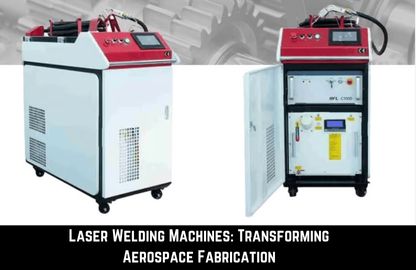
Laser Welding Machine: Precision at the Core of Aerospace Fabrication
The aerospace industry’s mandate for absolute precision and structural integrity makes the laser welding machine an ideal choice for joining critical components. Traditional welding methods often introduce excessive heat, leading to distortion, microstructural changes, and reduced mechanical properties in advanced alloys. Laser welding, by contrast, offers a highly concentrated and controllable heat source.
- Minimal Heat Input in Laser Welding Machine: The focused energy of a laser welding machine significantly reduces the heat affected zone (HAZ) around the weld. This is crucial when working with heat-sensitive materials like aluminum alloys, titanium, and nickel-based super alloys (e.g., Inconel), which are prone to warping or embrittlement with conventional welding. The minimal distortion means less post-weld machining, saving time and costs.
- High Aspect Ratio Welds in Laser Welding Machine: Laser welding machines can produce deep, narrow welds with a high depth-to-width ratio. This capability is essential for creating strong, structurally sound joints in thick sections of material, often found in engine casings, airframe components, and structural spars, while using less filler material.
- Reproducibility and Automation in Laser Welding Machine: The inherent programmability of a laser welding machine allows for consistent, repeatable welds. Integrated with advanced robotics and CNC systems, these machines can automate complex welding paths, drastically reducing human error and ensuring uniform quality across thousands of identical parts. This level of automation is critical for meeting the stringent quality control and certification requirements of aerospace manufacturing.

Laser Welding Machine: Forging Strength in Defense Applications
In the defense sector, the demands for robust, lightweight, and stealth-capable systems are constant. Laser welding machines contribute significantly to the fabrication of armaments, armored vehicles, naval vessels, and advanced aircraft components, where reliability under extreme operational stress is non-negotiable.
- Joining Dissimilar Metals: The unique characteristics of a laser welding machine make it suitable for welding dissimilar metals, which is often required in defense for optimized material properties (e.g., lightweight alloys joined to ballistic steels). This capability expands design possibilities for engineers seeking to balance weight, strength, and specialized functions.
- Fabrication of Armored Structures: For armored vehicles and personnel carriers, laser welding machines are used to join high strength steels and advanced composite armor components. The deep penetration and strong metallurgical bonds created by laser welding ensure the integrity of protective structures, which is vital for personnel safety.
- Repair and MRO (Maintenance, Repair, and Overhaul): Beyond initial fabrication, laser welding machines play a critical role in the repair and overhaul of high value defense assets. Components that might otherwise be scrapped due to wear or minor damage can be precisely repaired, extending their service life and reducing operational costs. This is particularly relevant for expensive engine parts, turbine blades, and structural elements of military aircraft.
What Our Customers Say
“Largest Display of Machinery across India. Wide range of Machines. Very Co-operative staff. Range of Tapping Machine and Re-sharpening Machines are outstanding. Very Cost effective and useful in Precision Machining Work. Their staff is co – operative for after sales support.”
Tirth Bhojani On Google
Laser Welding Machine: Enabling Advanced Materials and Light weight
Both aerospace and defense industries are relentless in their pursuit of lighter, more fuel-efficient, and higher-performance platforms. This drive necessitates the use of advanced materials, for which the laser welding machine is often the only viable joining solution.
- Titanium and Nickel Based Super alloys in Laser Welding : These materials are critical for high temperature and high stress applications (e.g., jet engine components, missile casings). Their reactivity and susceptibility to hot cracking make them challenging for traditional welding. A laser welding machine provides the localized, rapid heating and cooling cycles that minimize these issues, creating robust welds in these exotic alloys.
- Aluminum Alloys in Laser Welding : Used extensively in aircraft structures for their lightweight properties. Laser welding machines offer superior control over arc stability and porosity in aluminum, overcoming common challenges associated with traditional methods and facilitating stronger, lighter airframes.
- Composites and Hybrid Structures in Laser Welding: The future of aerospace involves integrating metallic and composite materials. While composites themselves aren’t welded, laser welding machines are crucial for joining the metallic components within these hybrid structures or for attaching metallic inserts to composite frameworks, enabling revolutionary designs.
Laser Welding Machine: Micro-Welding and Complex Geometries
Modern aerospace and defense systems incorporate increasingly intricate and miniaturized components, especially in electronics, sensors, and guidance systems. Laser welding machines excel in these micro-precision applications.
- Micro-Welding Capabilities: High-precision laser welding machines can achieve weld spots as small as tens of microns. This is essential for delicate electronic components, miniature sensors, and precision instruments where even minimal heat input could damage sensitive circuits or components. Applications include joining fine wires, micro-sensors, and hermetic sealing for sensitive electronics.
- Complex Geometries: Advanced laser welding machines, often integrated with multi-axis robotics or galvanometer scanning systems, can create welds along highly complex, three-dimensional contours. This enables the fabrication of intricate cooling channels in turbine blades, lightweight lattice structures, and specialized connectors that would be impossible or cost-prohibitive with other methods. This capability supports innovative designs for improved aerodynamic performance and stealth characteristics.
- Additive Manufacturing Integration: As additive manufacturing (3D printing) gains traction in these industries for creating complex parts, laser welding machines are often used for post-processing, repair, or for joining larger additively manufactured sections, ensuring the final structure meets critical specifications.
Laser Welding Machine: Impact on Efficiency, Safety, and Innovation
The integration of laser welding machine technology profoundly impacts various aspects of aerospace and defense manufacturing, extending far beyond the immediate joining process.
- Enhanced Productivity and Cost Reduction: The speed and automation capabilities of laser welding machines lead to significantly higher throughput compared to manual or semi-automatic methods. Reduced rework due to minimal distortion, less post-weld machining, and greater material utilization contribute directly to lower manufacturing costs and improved production timelines.
- Improved Product Safety and Performance: The consistent, high quality welds produced by laser technology enhance the structural integrity and reliability of components. This directly translates to improved safety for aircraft and defense systems, as well as enhanced performance through optimized weight to strength ratios and reduced failure points.
- Driving Innovation: The unique capabilities of laser welding machines free designers and engineers from the constraints of traditional joining methods. This enables the development of entirely new product architectures, leveraging advanced materials and geometries that were previously unmanufacturable. This innovation is crucial for maintaining a competitive edge and addressing evolving threats in defense, and for pushing the boundaries of flight in aerospace.

Conclusion: The Indispensable Tool
The laser welding machine is not merely another tool in the aerospace and defense manufacturing arsenal; it is a fundamental enabler of next-generation technologies. Its ability to deliver precision, minimal heat input, high-strength welds, and automation when working with advanced, often challenging materials, makes it indispensable. From micro-welding delicate sensors to constructing robust airframe components and armored structures, the laser welding machine provides the control and capability required to meet the unyielding demands for reliability, performance, and safety in these critical industries. As these sectors continue to innovate and push the boundaries of what is possible, the role of advanced laser welding machine technology will only continue to expand, cementing its position as a cornerstone of modern fabrication.


