



Mastering Thermal Stability in Cylindrical Grinding
In the world of high-precision manufacturing, accuracy is not just a requirement; it is the defining characteristic of quality. As industries push for tighter tolerances and flawless surface finishes, the role of advanced machining processes becomes critical. Among these processes, grinding stands out as the final step for achieving perfection. However, reaching the pinnacle of sub-micron accuracy requires more than just a rigid machine and a high-quality wheel. It demands a mastery of the machining environment, specifically the thermal stability of the equipment.
Thermal stability is the ability of a machine tool to maintain its geometric integrity despite temperature fluctuations. In grinding, heat is an unavoidable byproduct. The friction between the abrasive wheel and the workpiece generates intense thermal energy. If not managed correctly, this heat transfers into the machine structure, causing expansion, distortion and ultimately, errors in the final part. For manufacturers aiming for sub-micron precision, understanding and controlling these thermal dynamics is paramount.
Cylindrical Grinding Machines and its Challenges
The fundamental challenge in precision engineering is that metal expands when heated. Even a minuscule change in temperature can result in significant deviations when measuring in microns. Cylindrical Grinding Machines are designed to hold workpieces between centers or in a chuck while rotating them against a grinding wheel. This interaction creates a complex thermal environment. The primary sources of heat include the cutting action itself, the friction from bearings and guideways and the heat generated by the machine’s internal systems, such as motors and hydraulic units.
When a machine operates over a long shift, these heat sources can cause the machine frame to deform. This deformation might manifest as the spindle moving away from the workpiece or the guideways twisting slightly. These movements are often imperceptible to the naked eye but are disastrous for sub-micron tolerances. Therefore, the design and engineering of modern equipment focus heavily on mitigating these thermal effects to ensure consistent repeatability from the first part of the day to the last.

Hydraulic Cylindrical Grinding: Machine Systems and Thermal Management
One of the traditional yet enduringly popular configurations in this field is the hydraulic cylindrical grinding machine. These machines utilize hydraulic fluid to power various movements, such as the longitudinal traverse of the table or the rapid approach of the wheel head. While hydraulics offer smooth and powerful motion, the fluid itself can become a significant heat source. As the hydraulic oil circulates under pressure, friction within the pump and valves increases the fluid’s temperature.
If this warm oil circulates through the machine casting, it acts as a central heating system, unevenly warming the machine bed. To combat this, modern designs often isolate the hydraulic power unit from the main machine body. By placing the reservoir and pump externally, manufacturers prevent direct heat transfer to the critical structural components. Furthermore, advanced systems incorporate heat exchangers or chillers to actively regulate the temperature of the hydraulic fluid, keeping it consistent with the ambient room temperature. This careful management ensures that the hydraulic system provides the necessary force and smoothness without compromising the machine’s thermal equilibrium.
Cylindrical Grinders: Structural Material Innovation
The material chosen for the machine base plays a crucial role in thermal stability. Historically, cast iron has been the standard due to its excellent damping properties and durability. However, cast iron is also conductive, meaning it reacts relatively quickly to changes in ambient temperature or internal heat generation. To achieve higher levels of stability, manufacturers of Cylindrical grinding machine are increasingly turning to alternative materials like natural granite or polymer concrete.
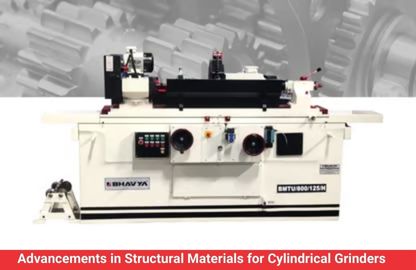
Polymer concrete, for instance, has a much lower thermal conductivity than cast iron. This means it reacts much slower to temperature changes, providing a “thermal flywheel” effect. It absorbs heat slowly and releases it slowly, smoothing out the peaks and valleys of temperature fluctuation during a machining cycle. This thermal inertia is vital for long-duration grinding operations where consistency is key. By utilizing a base material that resists rapid thermal expansion, the geometric relationship between the wheel and the workpiece remains stable, facilitating the achievement of sub-micron accuracy.
Cylindrical Grinding Machine Coolant Strategies
While the machine structure handles the long-term thermal stability, the immediate heat generated at the cutting zone must be evacuated instantly. This is the role of the coolant system. In a high-precision cylindrical grinders, the coolant does more than just lubricate the cut; it is the primary vehicle for heat removal. If the coolant supply is inconsistent or if the temperature of the coolant itself fluctuates, the workpiece can expand or contract during the grinding process.
Effective thermal control requires a coolant system that is temperature-regulated. Chillers are used to maintain the coolant at a precise temperature, often matched to the machine bed or the ambient air. Additionally, the application of the coolant is critical. High-pressure nozzles must direct the fluid exactly into the contact zone to break the air barrier created by the spinning wheel. This ensures that the heat is carried away in the chips and the fluid, rather than soaking into the workpiece or the machine spindle. Proper filtration is also essential, as suspended swarf can retain heat and return it to the cutting zone, undermining the thermal control efforts.
Hydraulic Cylindrical Grinder Spindle Stabilization
The heart of any grinder is its spindle. The wheel spindle and the workhead spindle are dynamic components containing bearings that generate friction and heat at high rotational speeds. In a Hydraulic Cylindrical Grinder, the thermal growth of the spindle is a specific area of concern. As the bearings warm up, the spindle shaft tends to elongate. This axial growth pushes the grinding wheel forward, potentially causing it to cut deeper than intended.
To address this, machine designers employ several strategies. One method is the use of thermally symmetric designs, where the spindle housing allows for even expansion that does not affect the centreline height. Another approach involves active cooling of the spindle housing, using a jacket of temperature-controlled oil or water to encase the bearings. This removes heat at the source before it can cause structural distortion. Furthermore, some advanced machines utilize non-contact hydrostatic bearings, which eliminate mechanical friction entirely, though the fluid temperature must still be strictly managed.
What Our Customers Say
“Largest Display of Machinery across India. Wide range of Machines. Very Co-operative staff. Range of Tapping Machine and Re-sharpening Machines are outstanding. Very Cost effective and useful in Precision Machining Work. Their staff is co – operative for after sales support.”
Tirth Bhojani On Google
Cylindrical Grinding Machines: Environmental Control
Even the most thermally stable machine cannot compensate entirely for a volatile environment. The placement of Cylindrical Grinding Machines within the factory floor significantly impacts their performance. Direct sunlight, drafts from open doors or proximity to HVAC vents can create thermal gradients across the machine.
For sub-micron accuracy, the machine should ideally be housed in a temperature-controlled environment. However, when a dedicated climate-controlled room is not feasible, creating a micro-climate around the machine is the next best step. Enclosures help shield the machining area from external drafts and trap the mist and heat for extraction. Allowing the machine to “warm up” is also a standard operating procedure. Running the machine through a warm-up cycle allows all components to reach a steady thermal state before any critical cutting begins, ensuring that the machine has settled into its operating dimensions.
Cylindrical Grinders and Thermal Compensation Software
Despite the best mechanical designs and environmental controls, some degree of thermal expansion is inevitable. This is where the intelligence of the machine controller comes into play. Modern Cylindrical Grinders are often equipped with sophisticated thermal compensation software. Sensors are placed at strategic points around the machine frame, spindle and ball screws to monitor temperature changes in real-time.
The control system uses this data, combined with a thermal model of the machine, to predict how the structure will deform. It then applies dynamic offsets to the axis positions to counteract the predicted error. For example, if the software detects that the spindle has grown due to heat, it will command the axis to retract by an equivalent amount. This intelligent feedback loop allows the machine to maintain accuracy even as temperatures fluctuate, bridging the gap between mechanical limitations and the demand for perfection.

Hydraulic Cylindrical Grinding Machine Axis Drive Systems
The method of moving the machine axes also contributes to the thermal equation. While a hydraulic cylindrical grinding machine uses fluid power, other designs might use ball screws driven by servo motors or linear motors. Each drive system has its own thermal signature. Ball screws, for instance, generate heat through friction as the nut travels along the screw. In high-speed reciprocating applications, this heat can cause the screw to lengthen, resulting in positioning errors.
To mitigate this, manufacturers may use hollow ball screws with internal cooling. Coolant runs through the center of the screw to extract heat directly from the core. Alternatively, pre-tensioning the ball screw places it under tension, so that thermal expansion simply relieves some of the tension rather than changing the length. Linear motors offer a different set of challenges; while they eliminate backlash, the primary coils generate significant heat directly under the table. Dedicated cooling circuits are mandatory for linear motor applications to prevent this heat from distorting the machine bed.
Cylindrical Grinding Machine Dressing and Thermal Shock
The process of dressing the grinding wheel is essential for maintaining a sharp cutting profile, but it also introduces thermal variables. The diamond dressing tool must be extremely rigid, but the interaction between the diamond and the wheel generates heat. More importantly, the dressing process removes the dull abrasive grains and exposes fresh, sharp ones. A dull wheel rubs rather than cuts, generating excessive heat and risking thermal damage to the workpiece, known as “grinding burn.”
A consistent dressing strategy on a Cylindrical Grinders ensures that the wheel remains free-cutting. This reduces the cutting forces and the associated heat generation. Furthermore, the dresser itself must be thermally stable. If the dresser mount expands due to heat, the reference point for the wheel diameter changes, leading to sizing errors on the workpiece. Therefore, the coolant flow during dressing is just as critical as during grinding to maintain the thermal equilibrium of the entire system.
Cylindrical Grinders and Workpiece Thermal Expansion
It is vital to remember that the machine is not the only element subject to thermal expansion; the workpiece itself is highly susceptible. In precision grinding, the goal is often to remove a specific amount of material to reach a final diameter. If the workpiece is hot from the grinding process, it will measure larger than it actually is. If the operator or the in-process gauging system measures the part while it is hot and grinds it to the target size, the part will be undersized once it cools down to room temperature.
Operators of Cylindrical Grinding Machine must be acutely aware of this phenomenon. Effective coolant application helps keep the part cool, but for the highest precision, the gauging system must also account for temperature. Some systems use temperature probes that touch the workpiece to measure its temperature and adjust the target size accordingly. This ensures that the final dimension is correct at the standard reference temperature, regardless of the heat generated during the process.
Cylindrical Grinding Machines: The Human Element
While automation and structural engineering address many thermal issues, the role of the operator remains significant. The way a Cylindrical Grinding Machine is set up and used influences its thermal behavior. Aggressive stock removal rates generate more heat. Long dwell times can allow heat to soak into the part. Even the cleanliness of the machine matters; a buildup of grinding sludge can insulate the bed and prevent heat from dissipating naturally.
Training operators to understand thermal dynamics is part of the solution. Simple habits, such as not opening the enclosure doors unnecessarily or ensuring the coolant tank is topped up, contribute to stability. Understanding that a cold machine behaves differently than a warm one prevents errors during the first few runs of a shift. The synergy between a well-designed machine and a knowledgeable operator is the final piece of the puzzle in achieving sub-micron accuracy.
Conclusion
Achieving sub-micron accuracy is a multifaceted challenge that goes far beyond the basic mechanics of abrasion. It is a battle against the laws of thermodynamics. Thermal stability is the bedrock upon which precision is built. From the innovative use of materials like polymer concrete to the intelligent management of hydraulic fluids in a hydraulic cylindrical grinding machine, every aspect of the equipment must be engineered to resist or compensate for heat.
The evolution of Cylindrical Grinding Machines continues to be driven by the need for tighter tolerances. By integrating advanced cooling systems, real-time thermal compensation and thermally symmetric designs, manufacturers are providing the tools necessary to meet these demands. Whether utilizing a versatile Hydraulic Cylindrical Grinder or a fully electric ultra-precision platform, the principles remain the same: control the heat, stabilize the structure and manage the environment. Only by mastering these thermal variables can the manufacturing industry continue to push the boundaries of what is possible, turning the concept of sub-micron accuracy from an ambitious goal into a reliable daily reality.


