



Buying a second-hand industrial machine is a significant investment that requires a balance of technical intuition and rigorous inspection. When sourcing equipment for a workshop, an all geared lathe stands out as a cornerstone of precision engineering. However, the market for used machinery can be a minefield of hidden wear and structural fatigue. To ensure that your investment translates into productivity rather than constant repair cycles, you must approach the procurement process with a systematic evaluation strategy. This article explores the essential parameters of machine assessment, focusing on maintaining high standards of accuracy and mechanical integrity.
The primary objective of this guide is to provide a comprehensive framework for evaluating the mechanical health and operational readiness of used metalworking equipment. By focusing on critical inspection points, buyers can distinguish between a well-maintained machine and one that has reached the end of its functional lifespan.
All Geared Lathe Machine Structural Integrity and Bed Condition
The foundation of any high-quality machining operation is the physical state of the machine bed. In an all geared lathe machine, the bed ways act as the track upon which the carriage and tailstock travel. Over years of heavy industrial use, these ways can develop “valleys” or uneven wear patterns, particularly near the headstock where the majority of turning work typically occurs.
When inspecting a used unit, one should look for scoring, deep scratches or signs of improper lubrication. A common red flag is the presence of “shimming” under the carriage or visible ridges on the prismatic ways. If the bed is worn unevenly, the machine will struggle to maintain parallelism over long distances, leading to tapered cuts that compromise the quality of the finished workpiece. Professionals often use a precision straightedge or a dial indicator to check for consistency along the entire length of the bed. It is also important to verify if the bed has been induction hardened, a feature often found in a Light Duty All Geared Lathe Machine, which significantly extends the life of the sliding surfaces.

All Geared Lathe Headstock and Transmission Performance
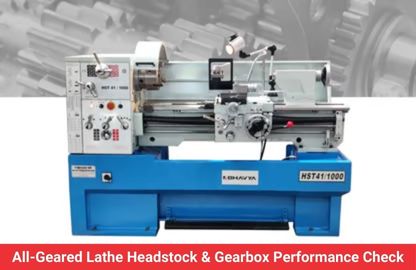
The headstock is the heart of the equipment, containing the complex network of gears that dictate spindle speeds and torque. In a used all geared lathe, the internal transmission must be inspected for both noise and vibration. A healthy gearset should run relatively quietly across all speed ranges. Excessive grinding, whining or clunking sounds often indicate chipped teeth, worn bearings or misalignment within the gear train.
Opening the headstock cover – if permitted by the seller – allows for a direct visual inspection of the gears. You should look for clean oil and the absence of metal shavings at the bottom of the casing. Metal debris is a clear indicator where gears are grinding against one another. Additionally, checking the spindle runout with a high-precision dial indicator is non-negotiable. Even a minor wobble at the spindle nose will be magnified as the distance from the chuck increases, making it impossible to perform high-tolerance engineering tasks.
Geared Drilling Machine and Lathe Cross-Slide Precision
While the primary focus is often on the longitudinal travel, the accuracy of the cross-slide and compound rest is equally vital. In many versatile shops, you might find a geared drilling machine sitting alongside a lathe, but the lathe’s ability to perform precise facing and boring operations depends entirely on the tightness of its slides.
Examine the lead screws for “backlash,” which is the amount of free play in the handwheels before the tool post actually moves. While some backlash is expected in older machines and can often be adjusted via a follow-nut, excessive play suggests that the lead screw or the nut is severely worn. Furthermore, check the “gibs” – the adjustable strips used to take up wear in the dovetail slides. If the gibs are tightened to their limit and the slide still feels loose or “rocks” under pressure, the machine may require expensive regrinding or scraping to restore its original precision.
Turret Lathe Machine Tooling and Tailstock Alignment
The versatility of a turret lathe machine or a standard center lathe is greatly diminished if the tailstock is out of alignment with the headstock spindle. A common check involves placing a test bar between centers and running a dial indicator along its length. If the reading fluctuates significantly, the tailstock may be “offset,” which is sometimes adjustable or the bore of the tailstock may be worn out of round.
Furthermore, inspect the quill of the tailstock for any internal damage or scoring. It should extend and retract smoothly throughout its full range of motion. For shops that handle diverse tasks, ensuring that the tailstock can firmly hold drill chucks or live centers is essential for maintaining the multi-functional nature of the lathe machine. A loose or vibrating tailstock will result in poor surface finishes and can even lead to tool breakage during heavy drilling or boring operations.
What Our Customers Say
“One stop solution for all kind of machine tools under one roof, Highly-trained & skilled staff to deal with, highly appreciated, prompt response n good staff team, after sales service too, Very prompt response”
AMISH SHETH On Google
All Gear Lathe Machine Electricals and Safety Features
In the modern industrial environment, the electrical system of an all gear lathe machine is just as critical as its mechanical components. Older machines may have outdated wiring that does not meet current safety standards. It is imperative to check the condition of the motor, the responsiveness of the emergency stop buttons and the integrity of the limit switches.
A professional inspection should include running the machine at its highest and lowest RPM settings to see how the motor handles the load. Overheating or a “burning” smell from the motor housing suggests that the electrical windings are failing. Additionally, verify the functionality of the feed rod and lead screw engagement levers. These components facilitate the automatic feeding and threading capabilities of the all geared lathe. If the feed engagement is sluggish or the threads produced are inconsistent, it points to issues in the apron or the quick-change gearbox.
Operational Ergonomics and Lubrication Systems
Beyond the five critical checks, the general “feel” of the machine provides insight into how it was treated by its previous operators. A well-lubricated machine is a well-maintained machine. Check if the automatic lubrication system – often a “one-shot” pump on the carriage – is functional and actually delivering oil to the ways and cross-slide.
Dry slides lead to “stick-slip” motion, where the tool moves in tiny jerks rather than a smooth, continuous flow. This phenomenon destroys surface finish and makes precision work nearly impossible. Whether you are looking at a heavy-duty model or a light duty all geared lathe machine, the presence of a thin film of clean oil on all moving surfaces is the best sign of a machine that still has many productive years ahead of it.

Strategic Considerations for Procurement
Selecting the right geared lathe machine requires an understanding of your specific production needs. A machine that is perfect for heavy-duty roughing might lack the finesse required for delicate instrument making. Conversely, a high-speed precision lathe might not have the rigidity needed for large-diameter turning.
Before finalizing a purchase, consider the availability of spare parts. Brands that have been in the market for decades often have better support networks for gears, bearings and specialized attachments. If you are buying a refurbished unit, ask for a “test chart” which outlines the factory-spec tolerances the machine met after its overhaul. This documentation acts as a guarantee of quality and provides a baseline for the machine’s performance in your own facility.
Conclusion
The goal of buying an all geared lathe is to enhance the capabilities of your workshop while maintaining a reasonable budget. By performing these five critical checks – evaluating the bed ways, headstock gears, slide precision, tailstock alignment and electrical safety – you mitigate the risks associated with the used machinery market.
A quality machine, even if it is several decades old, can often outperform cheaper, modern alternatives if its core castings and gears remain sound. Regular maintenance, including frequent oil changes in the headstock and constant cleaning of the ways, will ensure that your “new” used lathe remains a reliable asset. In the world of machining, precision is not just a goal; it is a requirement. Taking the time to thoroughly vet a machine before it hits your shop floor is the most effective way to guarantee that precision for years to come.
FAQs
What should I check in the bed of a used all geared lathe?
Inspect the bed for scoring, uneven wear and lubrication issues. Use a straightedge or dial indicator to ensure parallelism.
How can I verify the performance of a lathe's headstock?
Listen for abnormal noises like grinding or whining and check for metal debris inside the headstock. A spindle runout test is also essential.
What is the importance of checking the cross-slide precision?
Ensure the lead screws are free of excessive backlash and that the slides move smoothly. Tight gibs should prevent any rocking under pressure.
How do I check tailstock alignment on a lathe?
Use a test bar and a dial indicator to check for tailstock offset. Look for smooth operation of the tailstock quill without any scoring.
What electrical components should I inspect on a used lathe?
Check the motor's condition, emergency stop functionality and feed engagement levers. Verify the wiring meets current safety standards.


