



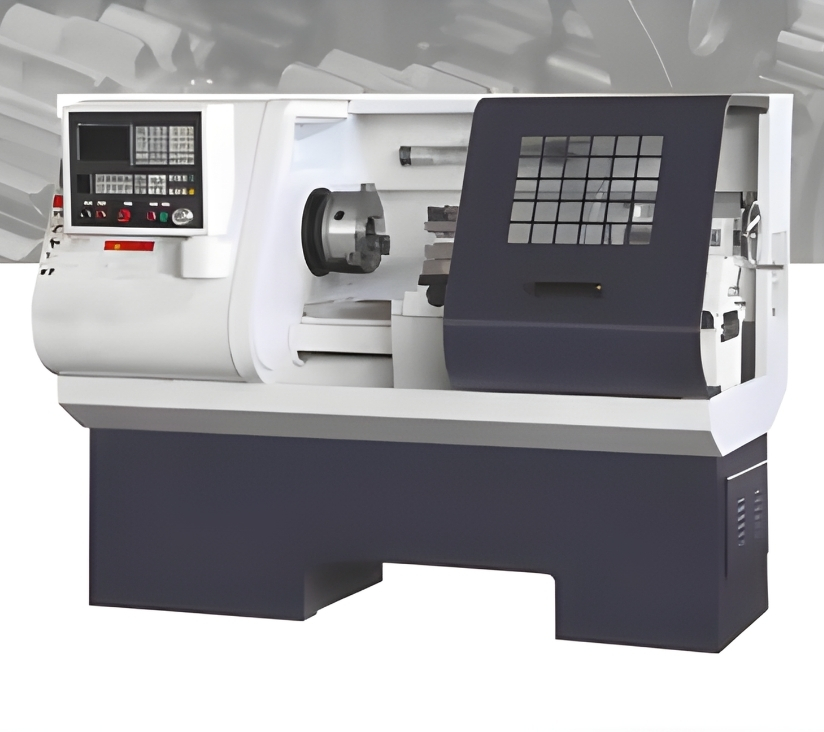
CNC Lathe Machine
When evaluating CNC lathe machine price for industrial procurement, understanding what drives the overall cost is far more valuable than comparing figures in isolation. The total investment attached to any CNC lathe machine is the result of a complex web of engineering decisions, component sourcing, control architecture and manufacturing tolerances – all of which must align with the specific demands of the application. Whether a facility is acquiring its first unit or expanding an existing fleet, a careful breakdown of these cost-driving elements leads to better purchasing decisions, fewer operational surprises and optimized long-term value.
CNC Lathe Machine Cost and the Role of Machine Class
The class of machine is the most immediate determinant of CNC lathe machine cost. Entry-level units designed for light-duty or prototype work occupy a very different cost tier than machines built for round-the-clock production in aerospace, oil and gas or heavy engineering environments. The classification of a unit – whether it is a slant-bed or flat-bed configuration, a two-axis or multi-axis platform or a turning center with live tooling – directly shapes the material inputs, engineering complexity and testing requirements that go into the build. Each step up in machine class involves progressively tighter tolerances, more robust spindle designs, heavier castings and more sophisticated thermal compensation systems, all of which contribute to cost escalation.
Within industrial procurement, the machine class also dictates the production workflow it supports. A unit intended for long-run shaft machining in automotive manufacturing demands higher structural rigidity and spindle duty ratings than one used for short-run custom components. Procurement teams must clearly define the intended workload, material types and dimensional requirements before a meaningful cost comparison across machine classes can be made.
CNC Lathe Controller Type and Its Impact on Total Investment
The CNC lathe controller is among the most significant cost contributors in the entire machine assembly. Controllers govern everything from axis interpolation and speed override to tool offset management and communication with factory automation systems. The choice between well-established proprietary controller platforms and open-architecture alternatives carries major pricing implications. Industry-standard controllers from recognized brands command a premium because of their proven reliability in demanding environments, extensive macro programming capability and the depth of technical support ecosystems built around them.
A CNC lathe controller designed for high-precision contouring and multi-axis synchronization involves substantially more engineering investment than a basic two-axis turning controller. For facilities running complex profiles with tight geometric tolerances, investing in a high-specification controller is non-negotiable – and the cost reflects that. Conversely, operations with simpler turning requirements can often source capable controllers at a lower price point without sacrificing the production quality they need. The controller also influences integration costs with upstream CAD/CAM systems and downstream quality inspection platforms, making it a factor that reaches beyond the machine itself.
Heavy Duty CNC Lathe Specifications and Structural Cost Drivers
A heavy-duty CNC lathe carries a cost structure that reflects the extraordinary engineering demands placed on it. These machines are built to cut large-diameter workpieces from tough alloys including hardened steels, titanium, Inconel and other high-performance materials used across defense, energy and rail industries. The bed construction for a heavy-duty CNC lathe typically involves heavily ribbed cast iron or polymer composite bases that provide vibration damping over extended cutting cycles. The spindle bearing arrangements in these machines are designed to sustain high radial and axial loads without compromising dimensional accuracy – a requirement that demands precision-ground components and specialized lubrication systems.
The tailstock, tool turret and carriage assembly on a mini CNC lathe must all be sized to match the machine’s rated capacity, adding further to the bill of materials. Hardened and ground guideways or linear roller technology used in heavy machines require specialized manufacturing processes that directly inflate production costs. For procurement teams sourcing machines for large-component production, the structural cost drivers of a heavy duty platform are justified by the machine’s ability to maintain geometric accuracy under conditions that would cause lighter units to deflect or chatter.
CNC Lathe Manufacturers and the Cost of Supply Chain Origin
The geographic origin of CNC lathe manufacturers shapes pricing in multiple interconnected ways. Manufacturers based in regions with high labor costs, strict quality management requirements and premium raw material sourcing will necessarily present higher unit prices than those operating in markets with lower overhead structures. This does not automatically translate to a direct quality hierarchy, as many manufacturers across different regions have closed the performance gap through automation and process investment. However, total cost of ownership models often reveal meaningful differences in longevity, spare part availability and service responsiveness that justify premium pricing from established manufacturers.
Certifications, compliance with international standards and the traceability of critical components also factor into the pricing strategies of CNC lathe manufacturers. A manufacturer maintaining full documentation chains, third-party inspection protocols and rigorous quality control will build those costs into the machine price. For regulated industries such as medical device manufacturing, nuclear component production or aerospace subcontracting, these documentation and compliance structures are not optional – they are purchasing requirements that make the higher price point a cost of entry.
CNC Lathe Companies and After-Sales Infrastructure Costs
The after-sales infrastructure offered by CNC lathe companies is an often underestimated component of the true cost of machine acquisition. A company with a dense network of field service engineers, a well-stocked regional parts warehouse and structured training programs represents a different value proposition than one that offers only remote diagnostics with extended lead times for replacement components. Facilities running high-utilization production schedules cannot afford extended unplanned downtime and the cost of that exposure must be priced into the sourcing decision.
Larger CNC lathe companies with broader industrial scope often include service-level agreement options, preventive maintenance packages and operator training programs that smaller suppliers cannot match at scale. These services come at a cost that is either embedded in the machine price or offered as add-on contracts, but their value in protecting production continuity over a machine’s operational life cycle is measurable. When evaluating competing offers, procurement teams should build a full 5-year or 10-year ownership model rather than anchoring solely to the purchase price.
CNC Lathe Spindle Configuration and Performance-Related Pricing
The spindle is the core working component of any turning machine and its specification has a direct relationship with machine price. Spindle speed range, power rating, torque curve, bearing class and thermal management design are all engineering variables that affect both machining capability and production cost. High-speed spindles designed for small-diameter, fine-finish turning involve precision-ground bearing sets, dynamic balancing and sophisticated cooling architecture – all of which add to cost. Heavy-duty spindles oriented toward large-diameter roughing operations require entirely different design approaches, with oversized bore diameters, reinforced bearing arrangements and higher-torque drive systems.
CNC Lathe configurations for opposed-spindle turning centers add another layer of cost, enabling complete machining of a workpiece in a single setup – a feature that reduces handling time and fixture investment but raises the machine’s capital cost considerably. For high-volume production environments where cycle time and setup reduction translate directly to throughput and profitability, the cost of a more capable spindle configuration is quickly offset by operational gains.
CNC Lathe Tooling Systems and Turret Specifications
The turret system is a critical cost variable that is often evaluated separately from the base machine price. A standard fixed-tool turret accommodating a limited number of tool stations represents a lower-cost option suited to turning operations without milling or drilling requirements. Live-tool turrets, which allow driven rotary tools for off-axis operations such as cross-drilling, slotting and milling on turned surfaces, introduce significant mechanical complexity and require their own motor and transmission systems – all of which are cost additive.
The number of CNC Lathe tooling stations available in the turret also affects cost and throughput simultaneously. A higher tool capacity reduces setup time between jobs in high-variety production environments, but the mechanical engineering required to deliver precise, repeatable tool positioning across more stations increases the turret’s manufacturing cost. Premium turret systems with hydraulic clamping and inductive tool identification systems represent the upper tier of this cost spectrum and are typically specified for unmanned or lights-out machining environments.
What Our Customers Say
“Our production speed has improved ever since we got a Bhavya machine. It’s smooth, durable, and works exactly as promised.”
Arti Mishra On Google
CNC Lathe Precision Standards and Metrology-Grade Components
Industrial applications across medical, aerospace and precision instrument sectors impose dimensional and geometric tolerances that require a CNC lathe to be built with metrology-grade components throughout its construction. Ballscrew assemblies must be pre-tensioned and ground to exacting lead accuracy standards. Linear guideways must be matched and paired with minimal friction variation. Thermal error compensation systems must model and correct for temperature-induced deformation across the machine structure during extended production runs. Each of these requirements demands tighter manufacturing tolerances during machine assembly and more rigorous acceptance testing – both of which increase the cost basis.
Acceptance testing protocols for precision-grade CNC lathes commonly include circular interpolation tests, positioning accuracy evaluations across the full axis travel, spindle runout verification and thermally stabilized dimensional checks. The cost of this testing process – including the time, instrumentation and skilled personnel required – is a legitimate pricing component that reflects the machine’s actual performance capability rather than nominal specification claims.
CNC Lathe Automation Integration and Peripheral System Costs
Modern CNC lathe Machine deployments in high-production facilities rarely involve a standalone machine. Bar feeders, part catchers, gantry loaders, robotic load/unload systems and in-process gauging units all extend the machine’s capability but add to the total system cost. The interface engineering required to integrate these peripherals with the machine controller – including signal mapping, safety interlock design and cycle synchronization – adds both engineering hours and hardware costs that must be factored into the total procurement budget. Connectivity to plant-level manufacturing execution systems, quality data collection platforms and predictive maintenance networks represents an additional layer of integration cost that is increasingly expected in smart manufacturing environments.
 Email Us Now!
CNC Lathe Investment Decisions and Total Cost Perspective
Approaching a CNC lathe acquisition through a total cost lens – one that accounts for machine class, controller specification, structural engineering, spindle capability, tooling systems, precision standards, automation integration and after-sales infrastructure – produces a far more accurate picture of the true investment involved than a simple price comparison. The factors that drive CNC lathe machine prices are deeply interconnected and optimizing for initial price at the expense of any of these dimensions typically results in higher operational costs, reduced throughput or shortened machine life.
Engaging directly with reputable CNC lathe companies during the specification phase – rather than after the budget has been fixed – allows procurement teams to align machine capability precisely with production requirements without over-specifying or under-specifying. A well-matched CNC lathe, sourced from a manufacturer whose quality standards and support infrastructure align with the facility’s operational needs, represents the most cost-effective path to reliable, high-quality output over the long term.
Conclusion
Understanding the true CNC lathe machine price goes well beyond the initial purchase figure – it demands evaluation of controller architecture, structural engineering, spindle capability and after-sales depth. Every specification decision carries a direct financial implication that compounds across the machine’s operational life. Procurement teams that engage with reputable CNC lathe manufacturers early are far better positioned to align capability with budget without costly missteps. A well-specified CNC lathe, matched precisely to production requirements and backed by credible service infrastructure, delivers the most defensible return on capital investment. Ultimately, the most cost-effective acquisition is not the lowest-priced unit – it is the one engineered to perform reliably and minimize total ownership cost over the long term.


