



Milling Machine Workshop Safety: A Complete Operating Guide for Hazard-Free Machining
Safe milling begins before the machine is ever switched on. Whether you operate a light duty milling machine for small-batch work or a heavy duty milling machine for high-load industrial tasks, the fundamental safety principles remain consistent. Avoiding those leads to tool breakage, workpiece ejection or serious operator injury. This guide covers the core safety rules every operator must follow – covering guards, PPE, work-holding, cutter handling and emergency procedures.
Milling Machine Guarding: First Line of Defence
Every milling machine must be fitted with the correct guards before operation begins. On a horizontal milling machine, arbor guards and chip shields are mandatory to contain flying swarf and prevent contact with the rotating cutter. Vertical and bed type milling machine models require column-mounted or overarm splash guards to direct coolant and chips away from the operator.
For a CNC lathe and milling combination unit, full enclosure guarding is standard, but operators must verify that interlocks are functional before each shift. Never bypass or remove a guard to improve visibility or access – instead, use proper lighting and adjust the work setup. On a DRO milling machine, the digital readout panel should always be positioned outside the cutting zone to prevent damage from chips and coolant spray.
Guard inspections should be part of the pre-start checklist, not an afterthought.
PPE for Milling Machine Operators: What You Must Wear Before Every Cut
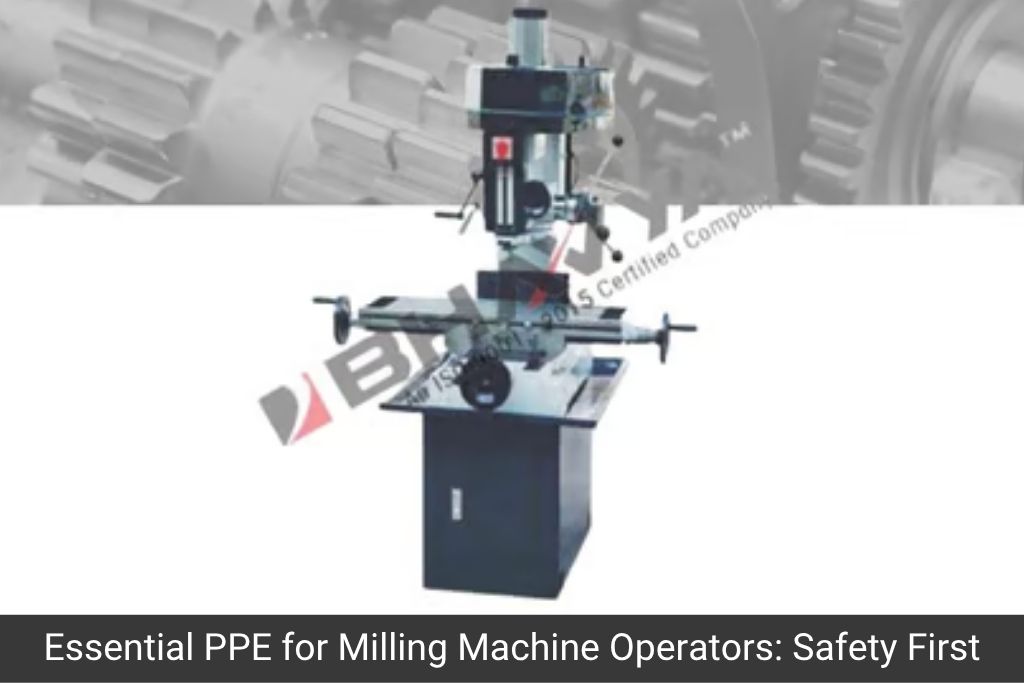
Personal protective equipment is non-negotiable at every milling station. The minimum PPE standard for any operator working on a drill cum milling machine includes safety glasses or a face shield, steel-toed footwear and close-fitting clothing with no loose sleeves or jewellery.
Anti-vibration gloves are recommended when handling heavy workpieces, but gloves must never be worn while operating a rotating spindle – they can catch and draw the hand into the cutter. Hearing protection is advisable during extended cuts on heavy duty milling machines where high-decibel noise levels exceed 85 dB. Respiratory protection should be used when dry-machining materials such as cast iron, aluminium or composites that generate fine airborne particles.
Bhavya Machine Tools consistently emphasises that PPE compliance is operator responsibility and workshop supervisors must enforce it without exception.
Work-Holding Safety on a Milling Machine: How to Secure Your Work piece the Right Way
Improper work-holding is one of the most common causes of serious milling accidents. A workpiece that shifts, lifts or is ejected during a cut can cause fatal injuries and destroy the cutter in the process.
On an all geared milling machine or a bed type milling machine, always use a properly torqued machine vice or dedicated fixture. Check that the vice is bolted securely to the table using T-bolts and step clamps. Never hold a workpiece by hand during a powered cut under any circumstances.
For irregular or heavy components on a heavy duty milling machine, use a rotary table, angle plates or custom jigs. When using a DRO milling machine, confirm the datum positions are set before engaging the feed – a misaligned starting point under automatic feed causes sudden tool dig-in and potential workpiece release.
On a CNC milling machine, verify the workpiece co-ordinate system (WCS) against the machine co-ordinate system (MCS) before running any program. Dry-run the toolpath at reduced feedrate on the first operation to confirm clearances.
Milling Cutter Handling Safety: Correct Tooling Practices to Prevent Injury
Milling cutters are sharp, brittle and operate at high rotational speeds. Mishandling them causes lacerations and tool fracture.
Always use the correct tool holder and ensure arbor nuts, collet chucks or end mill holders are properly tightened to the manufacturer’s specified torque. On a horizontal milling machine, inspect the arbor spacers and collar for damage before mounting a cutter. A loose arbor setup causes vibration, chatter and cutter pull-out.
When installing or removing cutters on a milling cum drilling machine, the spindle must be fully stopped and locked. Use a cloth or cut-resistant pad when handling end mills or shell mills – never grip the cutting edges with bare hands.
Check every cutter for cracks, chipped teeth or unusual wear before use. A damaged cutter on a light duty milling machine can fracture at speed and send fragments across the workshop. Discard any tool that shows visible damage, regardless of perceived remaining life.
Store cutters in protective sleeves or foam-lined cases. Never leave tools loose on the machine table where they can roll into the working zone or cause a handling injury.
Safe Milling Machine Operating Procedures Every Operator Must Follow
Safe operation requires discipline throughout the entire cutting process. Before engaging the feed on any milling machine, confirm that the cutter clears all clamps, vice jaws and fixture components at the intended depth of cut. Use a setup block or feeler gauge to establish tool height without relying on visual estimation alone.
On an all geared milling machine, select the correct spindle speed and feed rate for the material and cutter diameter. Running too fast or too slow generates excess heat, poor surface finish and elevated risk of cutter breakage. Refer to the machine’s speed chart and cross-reference with tooling manufacturer data.
Never leave a running machine unattended. On a CNC lathe and milling machine running an unattended cycle, ensure the fire suppression system and coolant supply are functioning and that the chip conveyor is not blocked. Monitor the first few passes of any new program closely.
Do not reach into the machining envelope during operation. Use a brush – not compressed air – to clear chips from the table, as compressed air drives swarf into eyes and skin and disperses it across the workshop floor.
What Our Customers Say
“Our production speed has improved ever since we got a Bhavya machine. It’s smooth, durable, and works exactly as promised.”
Arti Mishra On Google
Milling Machine Emergency Procedures: How to Respond and Shut Down Safely
Every operator must know the location and operation of the emergency stop before beginning any task. On a CNC milling machine, the E-stop is typically a red mushroom-head button located at the control panel and at key points around the machine perimeter. Test it at the start of each shift.
If a workpiece shifts during a cut, do not attempt to grab it. Hit the E-stop immediately and allow the spindle to come to a full stop before assessing the situation. For fires caused by coolant failure or dry machining of flammable materials, use a CO₂ or dry powder extinguisher – never water on an electrical machine.
In the event of a cutter breakage on a heavy duty milling machine, shut down power immediately and stand clear until all fragments have settled. Inspect the spindle, drawbar and work-holding before resuming any work.
Workshops using drilling and milling machines should post emergency procedures clearly at each machine station in the operator’s primary language. First aid kits and eyewash stations must be within 10 seconds’ walking distance of any active machining area.
 Email Us Today!
Conclusion
Safe milling is the product of consistent habits, proper training and equipment maintained to a serviceable standard. From light duty milling machines used in technical training workshops to CNC milling machines in high-volume production environments, the rules governing guards, PPE, work-holding, cutter care and emergency response do not change with machine size or complexity. Bhavya Machine Tools recommends that all operators undergo formal machine safety induction before independent operation and that safety audits are conducted at regular intervals to keep workshop standards high.


